

Skate Helmet NZ: Your Ultimate Buying and Safety Guide
- by Nigel
-

New Zealand recorded 9,692 skateboarding injury claims in 2020, after 8,083 in 2019 and before easing to 8,950 in 2021, according to reported ACC injury data. That's a useful reality check for parents and riders shopping for a skate helmet NZ option. Skating is fun, accessible, and often low speed, but falls can still involve kerbs, ramps, coping, concrete and sideways impacts.
A helmet shouldn't be chosen only because it matches a board or looks tidy. The important questions are whether it's intended for wheeled recreational devices, whether it meets the right performance standard, and whether it stays firmly in place when the rider loses balance. New Zealand's AS/NZS 2063:2020 standard gives buyers a practical benchmark, while correct fitting turns that approved product into useful protection.
Why Skate Helmet NZ Safety Matters Now
The previous injury figures point to a practical conclusion: helmet choice deserves more than a quick check of colour or price. The same ACC material records $9,636,176 in compensation for skateboarding injuries in 2018. Starship research also found 725 children were hospitalised with skateboard-related injuries during 2007 to 2011. Injuries were most common among Māori and European males aged 10 to 14, as summarised in the New Zealand injury reporting.
These figures do not make every skate session dangerous. They show why protective equipment deserves a place in the basic setup, particularly for children still learning to push, stop and land, and for riders using ramps, kerbs or busy public areas. A dedicated skate helmet is designed for the repeated falls and broad coverage common in those settings, rather than only the forward-moving impact pattern associated with road cycling.
The legal position can confuse buyers
New Zealand law does not require skateboard riders to wear helmets. Skateboards are classed as vehicles, and skateboarders may ride on roads. Te Ara's account, reported through Newstalk ZB's coverage of the Ministry of Transport position, explains that helmet use is strongly recommended but not compulsory.
A similar approach applies to devices such as e-scooters, rollerblades and hoverboards. The legal minimum therefore does not settle the safety decision. A school, club, venue or event can still encourage or require head protection, while parents can set a higher standard at home.
Practical rule: Treat helmet use as part of getting ready to skate, not as an optional extra reserved for difficult tricks.
A helmet helps only when it covers the likely impact areas, fits securely and suits the activity. For New Zealand riders, the combination of meaningful injury exposure and advisory rules makes the skate-specific standard, fit and ongoing condition worth checking before every session.
Choosing the Right Helmet Type for NZ Riders
A road cycling helmet and a skate helmet can both protect the head, but they're designed around different riding patterns. A road helmet usually prioritises low weight, ventilation and aerodynamic airflow. A skate helmet generally has a rounder, deeper shell, broader side and rear coverage, and a retention system intended to keep the helmet stable during falls around a park or street spot.
BMX helmets sit between those categories, depending on the model. Some offer more coverage than a typical road helmet, while full-face BMX options add a chin bar for riders tackling more demanding terrain. A dedicated skate helmet is usually the straightforward choice for skateboarding, roller skating and similar park use, particularly where repeated lower-speed falls are part of learning.
What AS/NZS 2063:2020 tells you
The New Zealand and Australian benchmark is AS/NZS 2063:2020, which explicitly covers helmets for wheeled recreational devices, including skateboards, roller skates, roller blades, hoverboards and kick-scooters. The official Standards New Zealand listing for AS/NZS 2063:2020 describes requirements covering:
- Impact attenuation: The helmet must manage impact energy within the standard's testing framework.
- Stability: The design must resist unwanted movement during use.
- Load distribution: The shell and structure must handle applied forces appropriately.
- Retention strength: Straps and fastening components must remain effective.
- Peripheral vision: The helmet must provide suitable clearance for the rider to see.
- Marking and conformity: The product must carry the relevant identification and testing information.
The 2020 revision also added normative conformity and batch-testing requirements, with specified impact velocities and indicative drop heights. You don't need to become a test engineer, but you should look for clear standards information rather than assuming a skater shape automatically means certified protection.
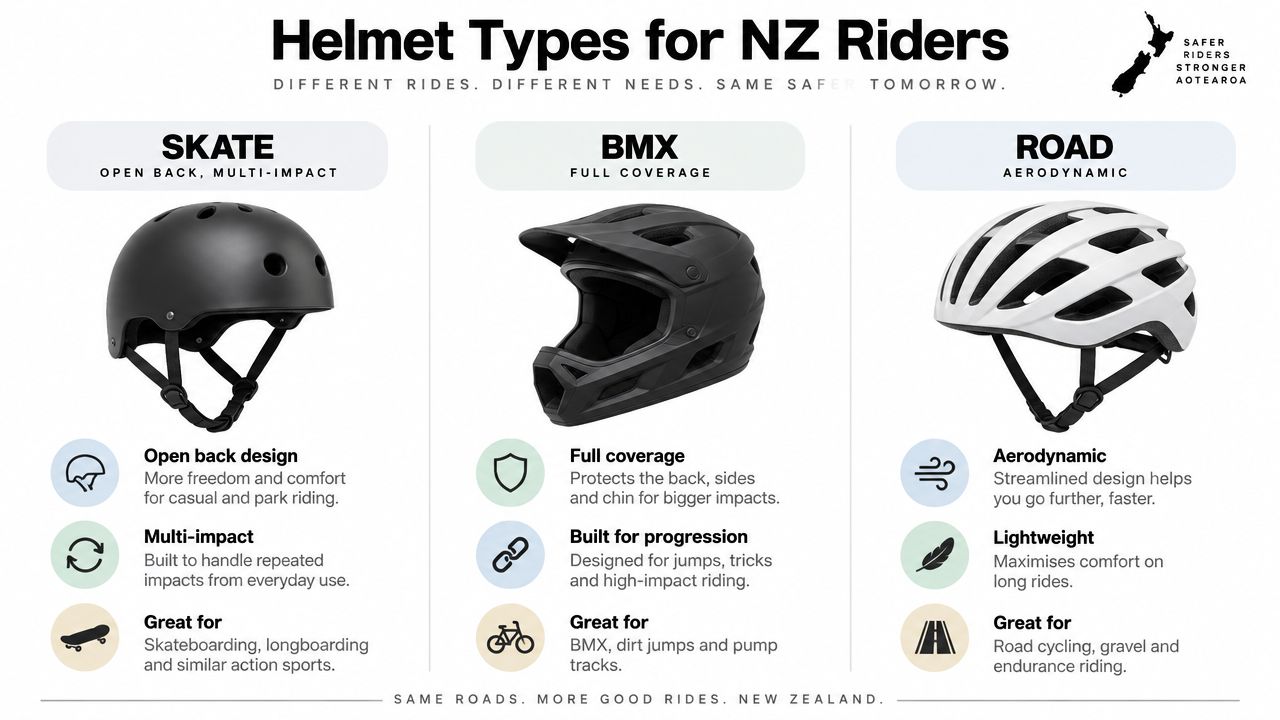
If a rider splits time between skating and bikes, compare the actual label and intended use. Don't choose a road model for park skating solely because it has more vents, and don't assume every skate-shaped shell is suitable for cycling. Riders considering extra facial coverage can also compare the design principles explained in this guide to full-face helmets.
How to Measure and Fit Your Skate Helmet
A helmet should feel secure before the rider rolls towards the first ramp. Start by measuring around the widest part of the head, keeping the tape level above the eyebrows and around the back of the skull. Use that measurement against the manufacturer's size chart, then try the helmet on with the adjustment system loosened enough to position it properly.
Starship's 2-4-1 fitting rule is a useful checklist. The Starship Safe Kids fitting guidance says:
- Two fingers above the eyebrow: The front edge should sit no more than two fingers above the eyebrows. This keeps the forehead covered without blocking vision.
- Two V shapes under the ears: Adjust the side straps so they meet in a clear V on each side, directly below the ears.
- One finger under the chin strap: Fasten the buckle and tighten it so only one finger fits between the strap and the underside of the chin.
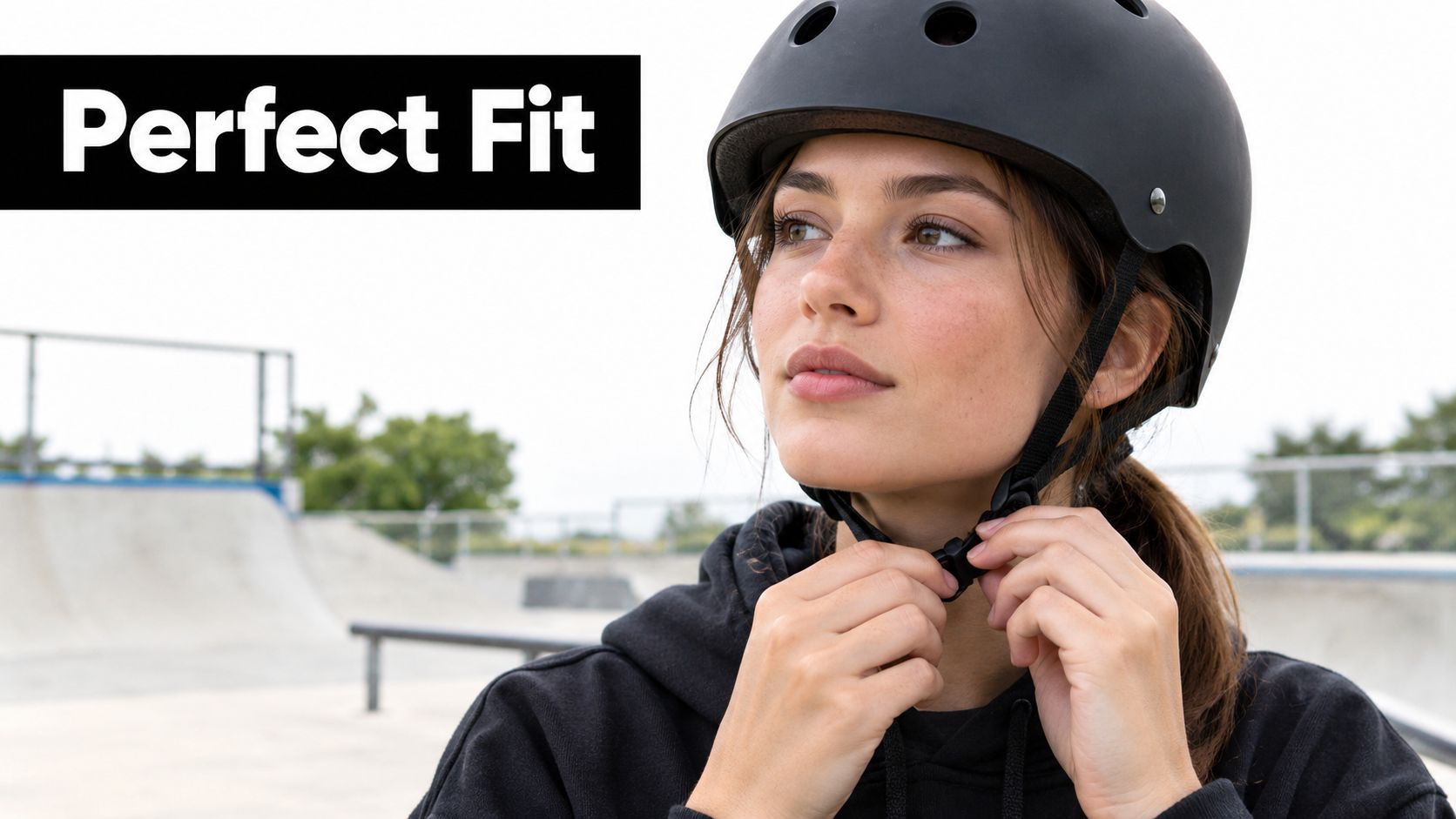
The helmet shouldn't rock from side to side when the rider shakes their head gently. It also shouldn't tip backwards and expose the forehead, or slide forwards towards the eyes. If the shell rotates easily, revisit the size, rear adjuster and strap geometry rather than just tightening the chin strap harder.
Check the fit while moving
Have the rider look left and right, bend forward, and open their mouth as if yawning. The helmet should remain stable without creating painful pressure points. Thick hair, ponytails and winter beanies can change the fit, so check the setup in the same conditions in which the helmet will normally be worn.
Starship states that a properly fitting approved helmet reduces the risk of serious brain injury by 74%, as reported in its fitting guidance. That figure applies to proper fit and approval together, not to a loose helmet with a certification label.
Use this practical demonstration as a visual fitting reference, then apply the 2-4-1 checks to the actual rider and helmet:
Understanding Certifications and MIPS Technology
Certification tells you what testing the helmet has passed. It doesn't tell you whether the helmet fits your rider, suits every activity, or will remain effective after a crash. Read the label inside the shell, the packaging and the product specification, and look for a named standard that matches the intended use.
For a New Zealand skate helmet, AS/NZS 2063:2020 is the clearest local benchmark because it specifically includes wheeled recreational devices. Some products also advertise ASTM and CPSC certification, often as a dual-certified option for riders who move between skating, BMX and other activities. Treat those markings as useful technical information, not as a substitute for checking coverage, size and retention.
Where MIPS fits
MIPS is a rotational-impact management system used in some helmet designs. In simple terms, it adds a low-friction layer or similar structure intended to allow controlled movement between the head and helmet during certain angled impacts. That approach addresses a different part of the protection question from the basic shell and impact-attenuation requirements.
A helmet can have MIPS and still be the wrong shape or size. It can also have a strong certification profile without MIPS. The sensible order is to confirm intended activity and recognised certification first, then compare fit, coverage, comfort and additional technologies.
Use product descriptions critically. A listing that says “skater helmet” but doesn't identify testing information leaves an important question unanswered. This certification gap is common in broad retail presentations, where branding and sizing may appear more prominently than the standard. The Rider 18 guide to bicycle riding helmets provides additional context for comparing helmet features, but skate buyers should still verify that the specific model is intended for their activity.
Read the label, not just the silhouette. A rounded shell may look suitable for the park, but the certification and fit information explain what the product has actually been designed and tested to do.
For a rider who skates and cycles, dual certification can make one helmet more versatile, but only if its coverage and fit work for both activities. If the intended use changes, reassess the helmet rather than relying on a familiar brand name.
Buying Your Skate Helmet in New Zealand
Buying online is convenient. You can compare shell shapes, size ranges, certification notes and adjustment systems from home, which helps when you already know the rider's head measurement and preferred fit. The risk is that a helmet that appears suitable on a product page may sit differently once it's on the head.
A specialist shop gives you a chance to test that fit before committing. In Nelson, Rider 18 operates from 60 Vanguard Street and offers helmets alongside workshop advice and cycling equipment. It's one option for riders who want to discuss intended use, try adjustments and compare open-face or more protective designs in person.
A practical buying route
Start with the activity, not the colour. A child using a skatepark needs a stable skate or wheeled-recreation helmet, while a rider combining park sessions with other disciplines may need to compare a skate model, BMX model or dual-certified design.
Then check the following points:
- Standards information: Look for AS/NZS 2063:2020 or clearly stated alternative certifications that match the planned activity.
- Head measurement: Measure the rider, then compare that result with the brand's own size chart.
- Adjustment range: Make sure the rear cradle and straps can secure the helmet without forcing the shell into an awkward position.
- Coverage and vision: Confirm that the helmet protects the forehead, sides and rear without interfering with sight lines.
- Returns and warranty: Read the shop's conditions before removing tags or using the helmet, especially when buying online.
If you shop online, take the time to fit the helmet indoors before the first session. Keep packaging and documentation until you're satisfied with the size and adjustment. If the helmet rocks, presses painfully or leaves gaps around the forehead, exchange it rather than hoping the fit will improve after a few rides.
A good buying decision balances certification, intended use and fit. Price and appearance matter, but neither can compensate for a helmet that moves during a fall.
Helmet Care and When to Replace It
A skate helmet is protective equipment, not a permanent piece of clothing. Sweat, dirt, sunlight, repeated handling and impacts can affect the liner, straps or fastening hardware, so give the helmet a quick inspection before sessions.
Remove the pads if the manufacturer allows it and wash them with mild soap and water. Wipe the shell with a soft cloth, let every part dry naturally, and avoid solvents, strong cleaners or high heat. Store the helmet somewhere cool and dry, away from direct sunlight and places where it can be crushed under tools or equipment.
Inspect the parts that hold protection in place
Look closely at the shell for cracks, splits, deep dents or deformation. Check the foam for compression, peeling or sections that have separated from the shell. Run your fingers along the straps and examine the buckle, adjusters and rivets for fraying, stiffness or damage.
Replace the helmet immediately after a significant impact or crash, even if the outside appears normal. Foam can compress internally without leaving an obvious mark, and the helmet may not provide the same protection during the next fall.
After a hard hit, retire the helmet. A clean-looking shell doesn't prove that the energy-absorbing material remains intact.
Manufacturers may provide care and replacement guidance for their own products. Follow those instructions rather than applying a universal age rule to every model. If the helmet has become loose because the padding has worn down, the straps no longer hold adjustment, or the rider's head has outgrown it, replace it before returning to the park.
Parents can use the same approach for children's equipment described in this guide to children's helmets in New Zealand. A quick pre-ride check takes little time and catches problems that are easier to fix at home than beside a ramp.
Staying Safe and Shredding with Confidence
A dependable skate helmet setup comes down to three decisions. Choose a model tested for the activity, fit it so the shell stays level and stable, and replace it after a serious impact or when its components deteriorate. Those steps matter more than a fashionable finish or the number of vents in the shell.
Parents should involve children in the fitting check, especially the position above the eyebrows and the feel of the chin strap. Adult riders should do the same before returning to a familiar helmet for a new season, because padding, straps and adjustment systems can change with use.
The legal position in New Zealand leaves helmet use advisory for skateboard riders, but the injury data gives riders a clear reason to take the choice seriously. A correctly selected skate helmet NZ product won't make every fall harmless, and it won't replace sensible progression, clear visibility or respectful park behaviour. It does give the rider a better foundation for learning, practising and enjoying the session.
Keep the helmet on for the whole ride, not only for the biggest ramp. Check it before rolling out, adjust it while the rider is calm, and replace it when the equipment has done its job in a crash.
Visit Rider 18 to compare helmet options and get practical advice on fit and protective equipment for riders and families. The Nelson team also provides workshop services and nationwide shipping, so you can organise the right gear before your next skate or cycling session.


