

Bike Service Cost NZ: A Practical Pricing Guide
- by Nigel
-

A basic bike tune in New Zealand typically starts at around NZ$95, and a standard service is around NZ$165 before parts. Suspension work and e-bike checks cost extra, so your final bill depends on what the mechanic finds and what you approve.
You might drop your bike off expecting a quick adjustment, then get a call about a worn chain, brake pads, or a hydraulic brake that needs bleeding. That doesn't automatically mean the workshop has overcharged you. It means the advertised package and the work needed to make your bike safe and reliable aren't always the same thing.
The useful question isn't just “What does a service cost?” It's “What's likely to be on the total invoice for my bike?” Read a quote through four lenses: what the service tier includes, which parts and consumables are extra, whether specialist or diagnostic work is needed, and how your riding adds up over time. For a related example of how pricing can change by service scope, see how insurance affects adjustment pricing.
Why Your Bike Service Quote Is Higher Than the Headline Price
A rider books a basic tune, expecting the listed service price to cover everything. The mechanic checks the bike and finds a stretched chain, worn brake pads, and a cable that no longer moves cleanly. The service fee covers inspection and adjustment, but those replacement items, plus the labour to fit them, may be charged separately.
That's the difference between a package price and a total invoice. Workshops generally price the mechanic's time for defined tasks such as adjusting gears and brakes, cleaning, and lubrication. A package may not include new parts, brake fluid, cables, tubeless sealant, freight, or extra diagnosis. If the mechanic finds a problem outside the agreed scope, ask for a price and approval before the work goes ahead.
New Zealand's Ministry of Transport treats bicycle maintenance as a recurring operating cost, not a one-off expense. Its 2023 transport-cost analysis uses an estimated average of about NZ$0.13 per kilometre for cycling maintenance, including typical marginal servicing and repair costs, but excluding the original purchase of the bike (Ministry of Transport cycling-cost analysis). That's a planning benchmark, not a prediction of what your local workshop will charge for a particular visit.
A practical service budget needs to account for both distance ridden and the condition of the bike. A lightly used commuter with working brakes and an intact drivetrain may need little beyond adjustment, while a bike ridden hard in wet or muddy conditions can arrive with several worn items at once. Those are different jobs, even if both customers booked a “tune-up.”
Ask before approval: Which work is included in the package, which parts or materials are extra, and will the workshop contact you before adding labour?
The Main Service Tiers Explained
A service tier is a starting scope, not a guarantee that every part will be replaced or repaired. Choose the tier that matches the bike's condition, then ask the mechanic to identify any additional work before it's authorised.
A Wellington workshop's published menu gives a useful local pricing example: basic mechanical service starts at NZ$95, standard service is NZ$165 before parts, full service starts at NZ$240, and an extensive overhaul starts at NZ$320. An e-bike system check adds NZ$20 to the base service (Wellington workshop service pricing). Those are workshop-specific prices, not national tariffs.
Match the service to the bike
| Tier | Typical scope | Common inclusions | Common exclusions |
|---|---|---|---|
| Basic tune | Check and adjust a bike in reasonably sound condition | Gear and brake adjustment, safety inspection, basic lubrication | Replacement parts, major cleaning, suspension work, electrical diagnosis |
| Standard service | Broader inspection and adjustment | More thorough checks, cleaning, lubrication, setup adjustments | Parts, consumables, significant repairs, specialist servicing |
| Comprehensive service | More involved work on a bike needing attention | Deeper inspection, more adjustments and workshop time | Unapproved replacement parts, major component repairs, some specialist procedures |
| Extensive overhaul | A substantial rebuild or restoration scope | Extensive disassembly, inspection, cleaning, and adjustment as agreed | Replacement components and any extra work not itemised in the quote |
The basic tier makes sense if the bike is running well and you mainly need its adjustments checked. If it's been a while since a proper service, or several systems need attention, a standard option can give the mechanic more time to assess the whole bike.
Don't pay for an overhaul just because the bike is old. Equally, don't book the cheapest tier if you already know the bike has noisy gears, weak braking, or a damaged wheel. Tell the workshop what you've noticed and ask which tier gives enough time to inspect it properly.
What Drives the Final Bill on Top of the Package Price
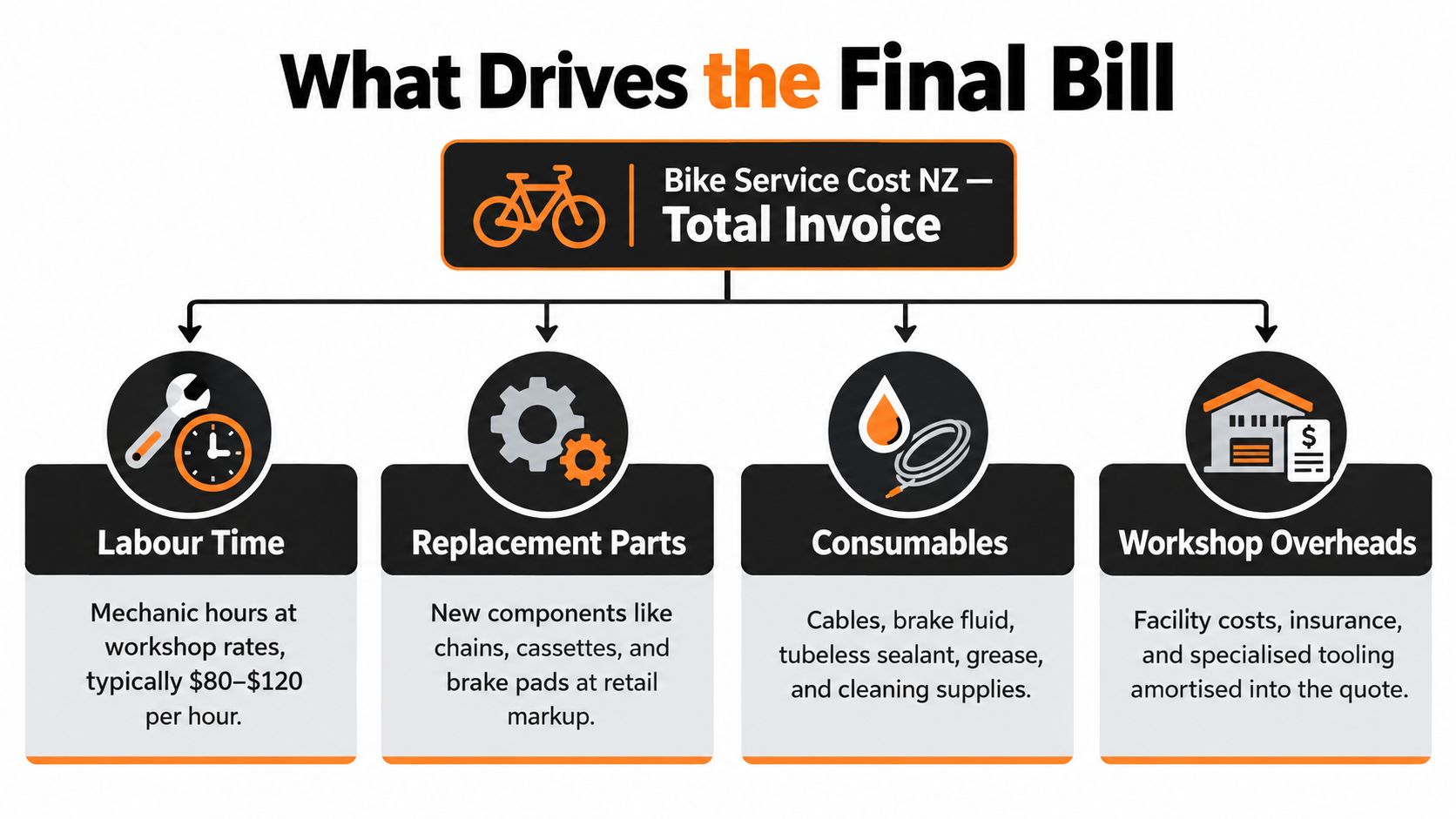
The invoice usually grows through four separate inputs: labour, replacement parts, consumables, and diagnosis. A package covers a defined amount of work. It doesn't mean the workshop can replace worn components, trace an intermittent electrical fault, and supply every material at no extra cost.
Read the line items, not just the total
Labour is the mechanic's time. Some work is bundled into a service package; other work may be charged separately. Ask whether an extra repair is priced as a fixed job or added to labour time.
Replacement parts include items such as chains, cassettes, brake pads, cables, and bearings. A worn chain can also affect the cassette, so ask the mechanic to show you what needs replacement and why. For a common small repair, see this guide to puncture repair cost in New Zealand.
Consumables are materials used during servicing, including brake fluid, grease, cleaning products, and tubeless sealant. They may appear as separate lines or be included in a quoted job. Don't assume either way. Ask.
Diagnostics apply when a mechanic needs to investigate an electrical or intermittent problem rather than complete a scheduled adjustment. A fault that comes and goes may take additional tracing before the cause is clear.
New Zealand service listings show why a headline price can be a poor guide to the amount due at collection. Published prices may separate labour, parts, consumables, freight, and diagnostic charges; one provider states that advertised service prices exclude these costs, while another lists hourly labour alongside separate materials charges (example of itemised service charges).
Practical rule: Ask which extra items require your approval, and whether freight, materials, and diagnosis are included. A clear quote should distinguish the package from work that might be added.
Suspension, Brakes, Wheels, and E-Bike Specific Work
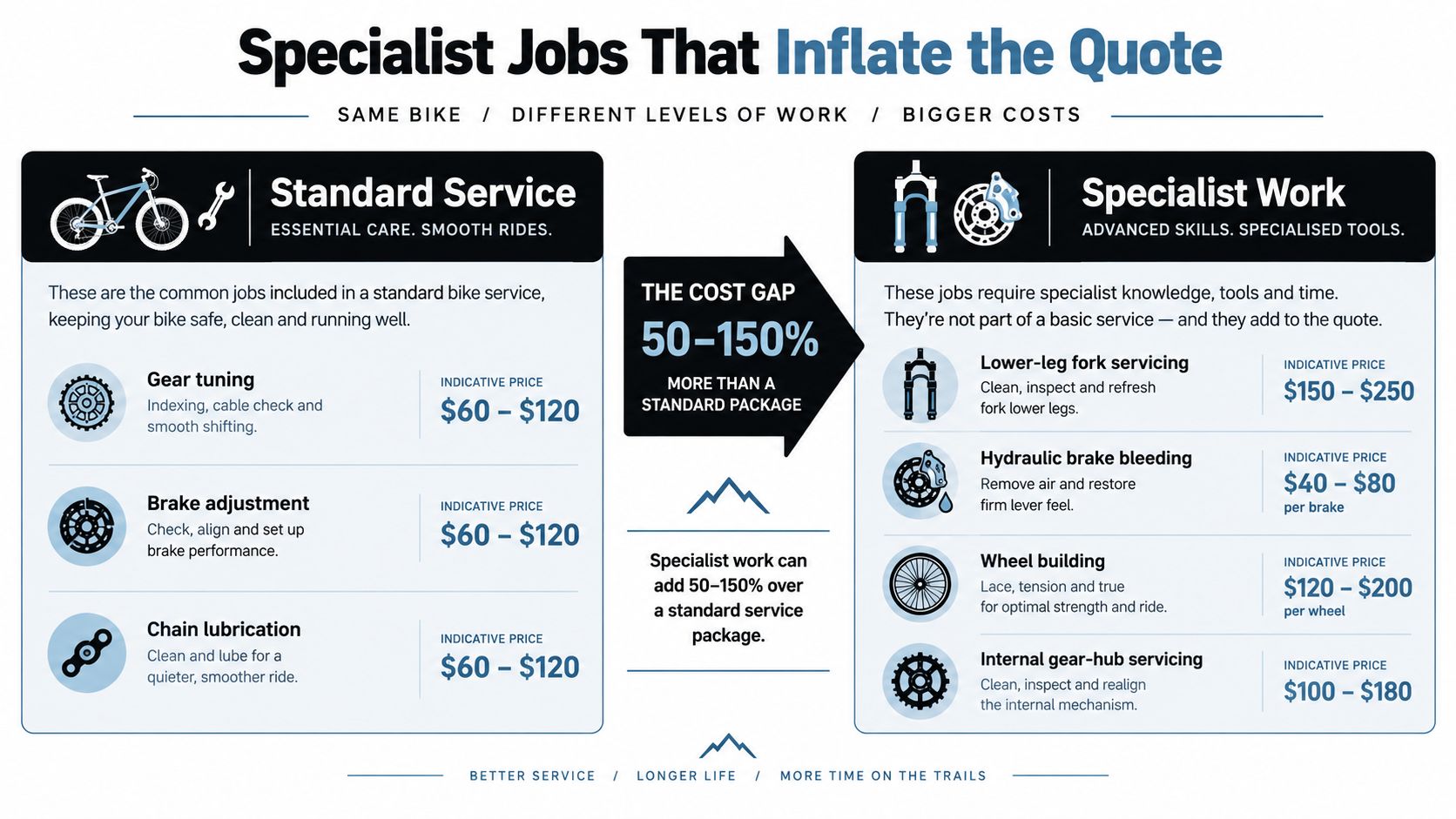
A gear adjustment and a suspension service aren't comparable jobs. Specialist work involves more disassembly, specific procedures, and materials that a routine tune doesn't need. That's why a mountain-bike quote can climb even when the bike looks clean.
Specialist work needs its own estimate
A New Zealand workshop lists lower-leg fork servicing from NZ$123, including labour, fluid, grease, and seals. The same workshop lists hydraulic brake bleeding from NZ$45 per brake, wheel truing or spoke replacement from NZ$47.50, suspension servicing from NZ$190, wheel building from NZ$120, and internal gear-hub servicing from NZ$90 (New Zealand specialist repair pricing). These are published starting prices, and the exact job depends on the components and their condition.
Fork servicing involves opening the fork and refreshing lubrication, while a hydraulic brake bleed requires handling fluid and working through the brake circuit. Wheel building and hub servicing also demand precise adjustment and component-specific work. If your bike needs several of these jobs, ask whether they can be done during one visit and how the labour will be priced.
For a fork service, provide the make and model if you know it, along with any history of leaks, poor performance, or previous servicing. For brake work, identify the brake system where possible. That helps the workshop scope the job and avoid a vague quote.
Keep e-bike diagnostics separate from mechanical servicing
An e-bike still needs ordinary mechanical maintenance, but a system check is separate work. If the motor cuts out intermittently or the battery and bike aren't communicating properly, tell the workshop what happens and when. Request a separate estimate for mechanical servicing and electrical diagnosis so you can see which work is driving the cost.
Mountain-bike owners can also ask whether suspension work should be booked alongside other repairs. The details matter, especially if the bike has a particular fork or shock; this guide to mountain-bike suspension service in New Zealand can help you understand the type of work involved.
Translating Workshop Prices Into a Yearly Maintenance Budget
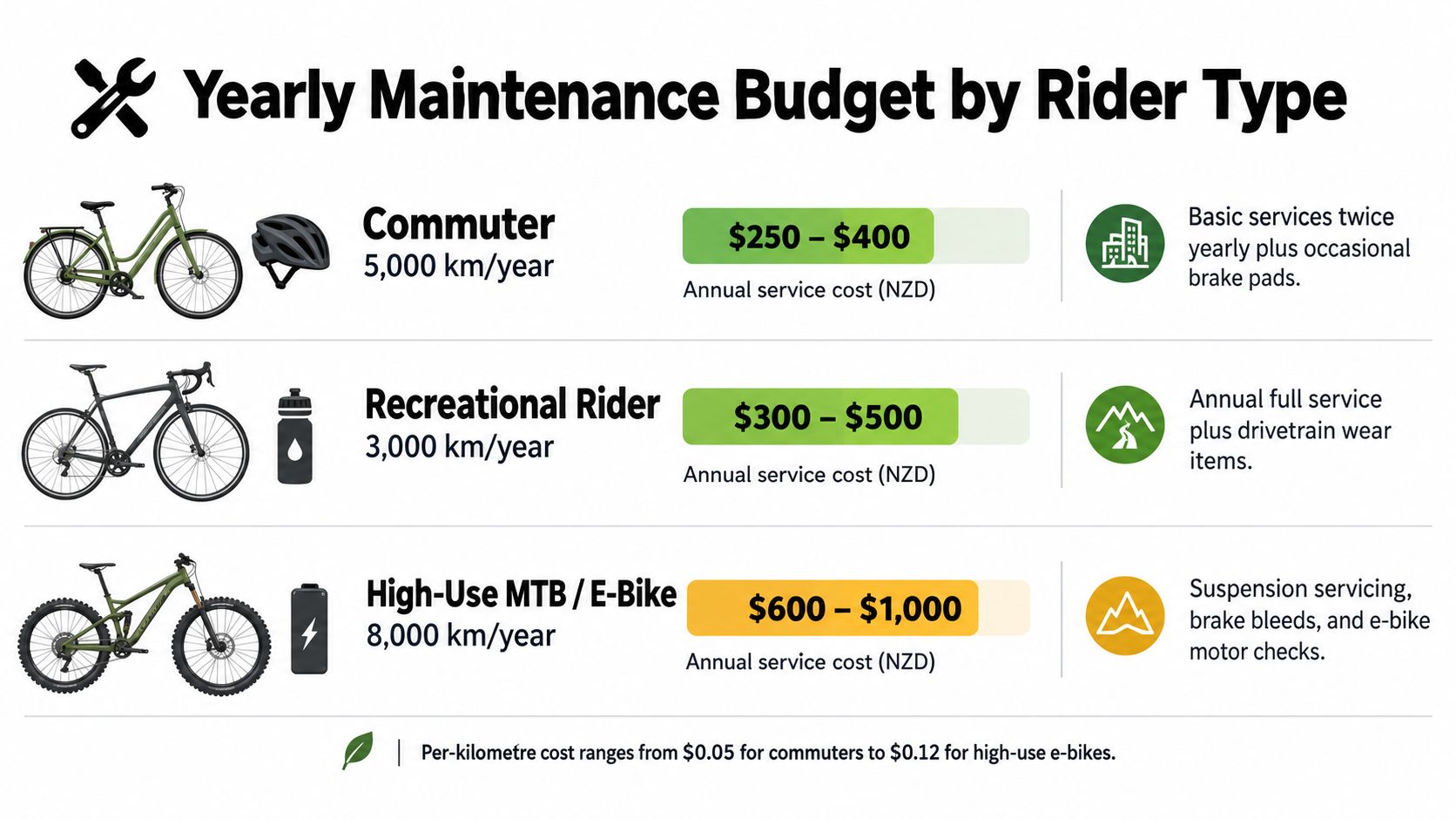
A single workshop visit tells you what the bike needs now. A yearly budget helps you avoid treating every worn chain or brake pad as an unexpected crisis. The Ministry of Transport's about NZ$0.13-per-kilometre figure is a broad planning benchmark, not a workshop tariff, so use it to think about running costs rather than predict a specific invoice.
A separate New Zealand government analysis used NZ$300 a year as a bicycle maintenance assumption, compared with NZ$2,290 a year for a car in the same analysis. That puts the bicycle figure at roughly 87% lower, or about NZ$25 a month, before the bike's purchase price or unusually expensive failures (Ngā Haerenga cost-benefit analysis). It's a historical planning comparison, not a promise that every rider's costs will fit that allowance.
Budget by use and condition
A commuter riding regularly should expect wear items to need attention as distance builds. A recreational rider may spend less on frequent parts replacement but still need a proper inspection and service. High-use mountain-bike and e-bike owners should plan for a wider range of work, including suspension, brakes, drivetrain wear, and system checks.
The transport analysis also includes a detailed example of a cyclist travelling 100,000 kilometres over 10 years and spending NZ$4,168 on repairs, equivalent to about NZ$0.0417 per kilometre. Repair spending was relatively consistent across four successive 25,000-kilometre intervals, at approximately NZ$1,100, NZ$1,014, NZ$1,036, and NZ$1,018. That example shows how costs can accumulate steadily with use rather than arriving only after a major breakdown.
Don't treat either government estimate as a guaranteed annual bill. Your own costs depend on distance, bike type, conditions, parts, and how well the bike is maintained. Use a recurring allowance for routine servicing and wear items, then keep a separate buffer for less predictable repairs. A scheduled maintenance routine can help you catch wear before it spreads to neighbouring components.
Smart Ways to Bring the Total Down
The cheapest advertised service isn't always the cheapest way to get a bike sorted. If the basic package covers adjustments but your bike also needs worn parts and a separate specialist job, the total can end up higher than a tier with a broader inspection and more included work.
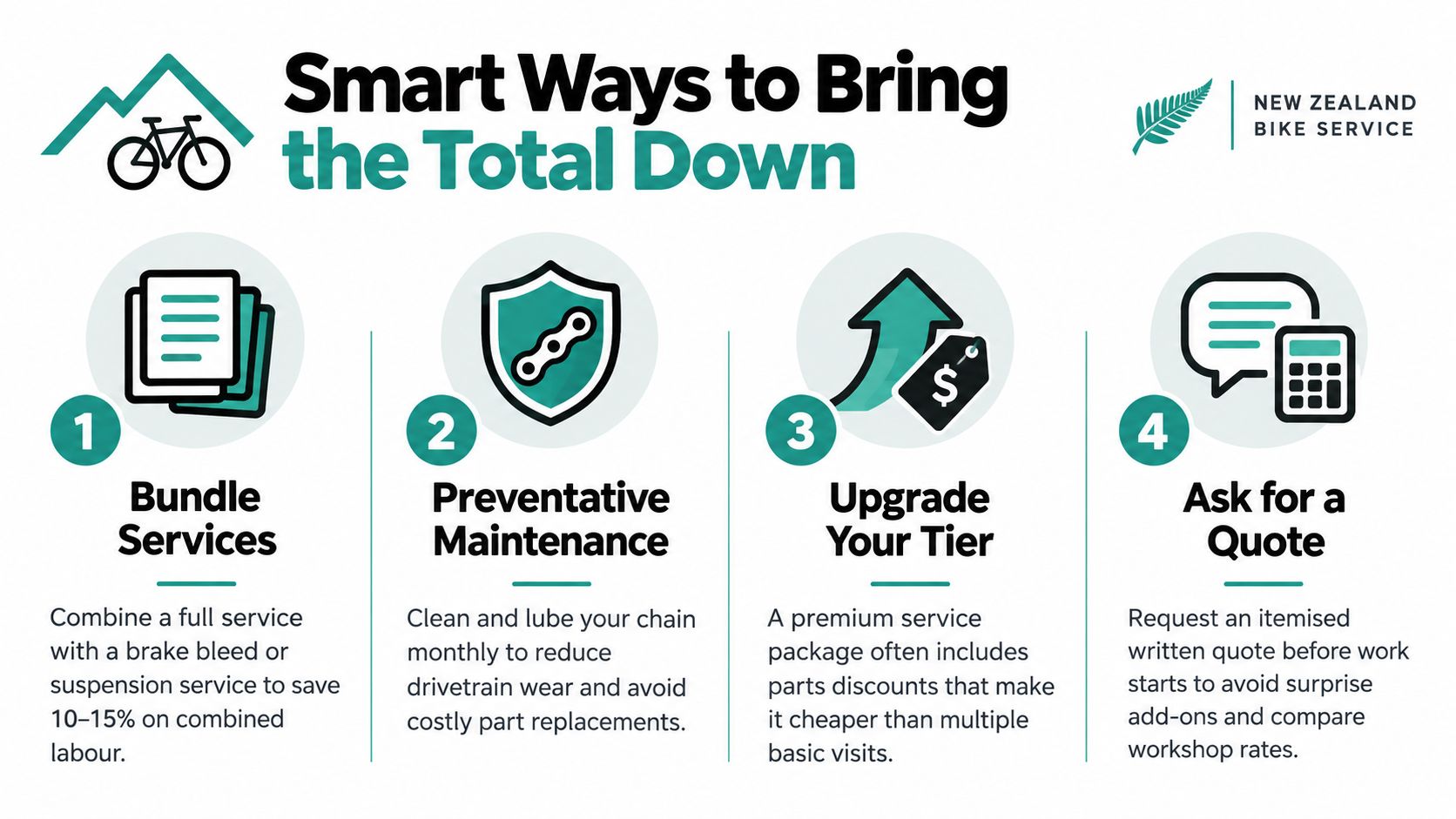
Think about the bike's actual condition before choosing a tier. If it needs only adjustments, a basic service is a sensible starting point. If the drivetrain is noisy, the brakes feel weak, and the fork is due for attention, ask the workshop whether it's more efficient to assess and quote the full job together.
You can also make the visit easier to price by describing symptoms clearly and sharing the bike's component details. Tell the mechanic whether the noise happens under load, whether the brake lever feels soft, or whether an e-bike fault is intermittent. Those details help distinguish a straightforward adjustment from a problem that needs more investigation.
Do basic checks between visits. Keep the chain clean and lubricated, check tyre condition, and pay attention to changes in braking or shifting. These habits won't prevent every repair, but they can help you spot a problem before it affects other parts.
Choose the right starting point: Book a basic service for a bike that's working well. If you already know it has several problems, ask for an assessment and an itemised quote rather than buying the cheapest package by default.
If you're considering supplying your own parts, ask first. The workshop may need to confirm compatibility, and some jobs make more sense when the mechanic can source the correct components. A clear discussion before booking is better than arriving with a part that doesn't fit.
Booking, Turnaround, and Warranty at Rider 18 Nelson
For Nelson riders, the most useful thing you can do before booking is describe the bike and the problem precisely. Rider 18 is based at 60 Vanguard Street, Nelson and provides bike workshop services. Contact the workshop to confirm current availability, booking arrangements, and expected turnaround, since timing depends on the service scope and parts required.
When you enquire, provide the bike's make and model, whether it's an e-bike, and what you've noticed. Mention any recent repairs or service history, and describe symptoms in plain terms, such as a slipping gear, rubbing brake, leaking fork, or motor that cuts out. If you have a photo of a component label or the problem area, include it where the booking method allows.
Ask for the quote to separate the service package from replacement parts, consumables, specialist labour, and any electrical diagnosis. Agree on a limit or approval point before work begins, so the mechanic knows to contact you before adding unplanned items. If the bike needs diagnostics, ask whether the initial check is charged separately and what happens if the fault takes longer to trace.
Turnaround depends on the tier, workshop workload, and whether the necessary parts are available. Confirm the expected collection timing when you book, and ask how the workshop handles labour or replacement-part warranties. Don't assume the same warranty applies to every component or repair; get the specific terms for the work on your invoice.
Putting It Together Into a Simple Decision Framework
Start with the bike's condition, not the cheapest advertised tier. If it rides well and needs routine adjustments, ask about a basic service. If it has several known issues, request a wider assessment and an itemised estimate.
Then budget for maintenance as a recurring cost, using distance ridden as a guide rather than assuming repairs will happen only after a breakdown. Separate the service package from parts, consumables, and any specialist or e-bike diagnosis. Before approving extra work, make sure you understand what it covers and what it costs.
For a Nelson booking, send Rider 18 the bike details, service history, and symptoms, then confirm the quote, approval point, and expected turnaround before dropping it off. That gives the mechanic a clearer starting point and gives you control of the final invoice.
Rider 18 offers workshop services and bike support for Nelson riders, from routine maintenance to more involved repairs. Before you book, gather your bike's details and the symptoms you've noticed, then visit Rider 18 to get started.


Please upload banner from store admin blog pages