

Balance Bike Reviews That Help You Choose Right
- by Nigel
-

You're probably looking at a row of balance bikes that all seem the same. Same small wheels. Same low frame. Same promise that your child will “learn to ride fast”. Then the doubt kicks in. Which one fits your child, which one will cope with your local paths, and which one will end up ignored in the garage after two weeks?
That's where most balance bike reviews fail. They chase brand names, colours, and vague age ranges. Parents don't need hype. They need a straight answer to one question: will this bike work for my child, right now, where we ride?
In New Zealand, that matters more than people think. A bike that feels fine on a smooth shop floor can feel awkward on chipped footpaths, park gravel, damp grass, or uneven shared paths. And a bike that technically suits a child's age can still be the wrong size if the saddle starts too high or the reach feels stretched.
Balance bikes are worth taking seriously as a first bike. Auckland Transport's kids' riding guide puts children on balance bikes from as young as 18 months, with common sizing aimed at roughly 85 to 110 cm in height and about 2 to 5 years of age, which is a useful local starting point for judging fit and progression to pedal bikes (Auckland Transport Kids Learn to Ride booklet).
The short version is simple. Ignore age-first shopping. Start with inseam, saddle height, bike weight, and tyre type. That tells you far more than a shiny product listing ever will.
Introduction to Balance Bike Reviews for NZ Parents
Your child spots a bike online, you check the price, and every listing sounds the same. “Perfect first bike.” “Great from age two.” “Lightweight frame.” Then it turns up, the saddle is too high, the tyres chatter on rough footpaths, and the bike gets parked in the garage.
That happens because too many balance bike reviews judge kids by age first and bikes by spec sheets second. That order is wrong. A useful review starts with your child's inseam, the bike's lowest saddle height, and the surfaces you ride on in New Zealand.
A child who can plant both feet flat will push off sooner, stop cleanly, and build confidence faster. A child who is tiptoeing on a tall bike usually resists it, even if the age label says the bike should fit. Add loose gravel, cracked concrete, damp grass, or rough seal, and bad fit shows up even faster.
What NZ parents should judge first
Start with these questions:
- Does the lowest saddle height match your child's inseam, with feet flat and knees slightly bent?
- Is there enough space to step through and scoot without catching the frame?
- Do the tyres suit your usual riding surface, not just a smooth shop floor?
- Can you raise the seat easily as your child grows?
- Is the bike light enough for your child to turn and for you to carry home?
That is why age charts are a weak shortcut. Body dimensions tell you more. This guide to a child's balance bike fit and setup gets the priority right. Fit first, then features.
Reviews that ignore inseam and saddle height are product listings, not buying advice.
Why balance bikes deserve proper scrutiny
Balance bikes teach the part that matters first. Pushing, gliding, steering, and catching balance with their own feet. Pedals can wait.
For NZ families, terrain changes the review. Small hard tyres that feel fine indoors can feel harsh and twitchy on chipped footpaths or park gravel. A slightly heavier bike with better tyres can be the smarter buy if your local rides are rough. On flatter, smoother paths, a lighter bike often helps a cautious child get started sooner.
So the right review question is simple. Will this bike fit this child, on these surfaces, right now?
That is the standard worth using.
What Makes a Great Balance Bike Worth Buying
A balance bike earns its keep when a child can get moving without fear, keep control on your usual surfaces, and still fit the bike six months later. That is the standard. Brand hype, paint colour, and age labels come well behind it.
Use this table to judge the bike in front of you.
| Review Criterion | What to Check | Why It Matters in NZ |
|---|---|---|
| Saddle and frame fit | Low saddle range, easy step-through, enough room to scoot cleanly | A child learns faster when they can push, stop, and reset on rough footpaths or driveway lips without feeling perched |
| Weight | Light enough for the child to straighten and steer, reasonable for a parent to carry home | Heavy bikes feel slow to turn and become dead weight halfway through a walk |
| Frame material | Steel, alloy, or wood, plus welds, finish, and weather resistance | NZ use means knocks, damp garages, and bikes left on concrete after a ride |
| Tyre type | Air or foam/EVA, plus width and tread | Tyres decide how the bike behaves on gravel paths, grass, chip seal, and smooth pavement |
| Adjustment range | Seat height range, bar height if fitted, simple clamps | Good range gives you a better fit now and more useful life before the bike is outgrown |
| Brake and finishing details | Rear hand brake, grip ends, steering limit, secure hardware | These details matter once a child starts gliding faster and riding on slight slopes |
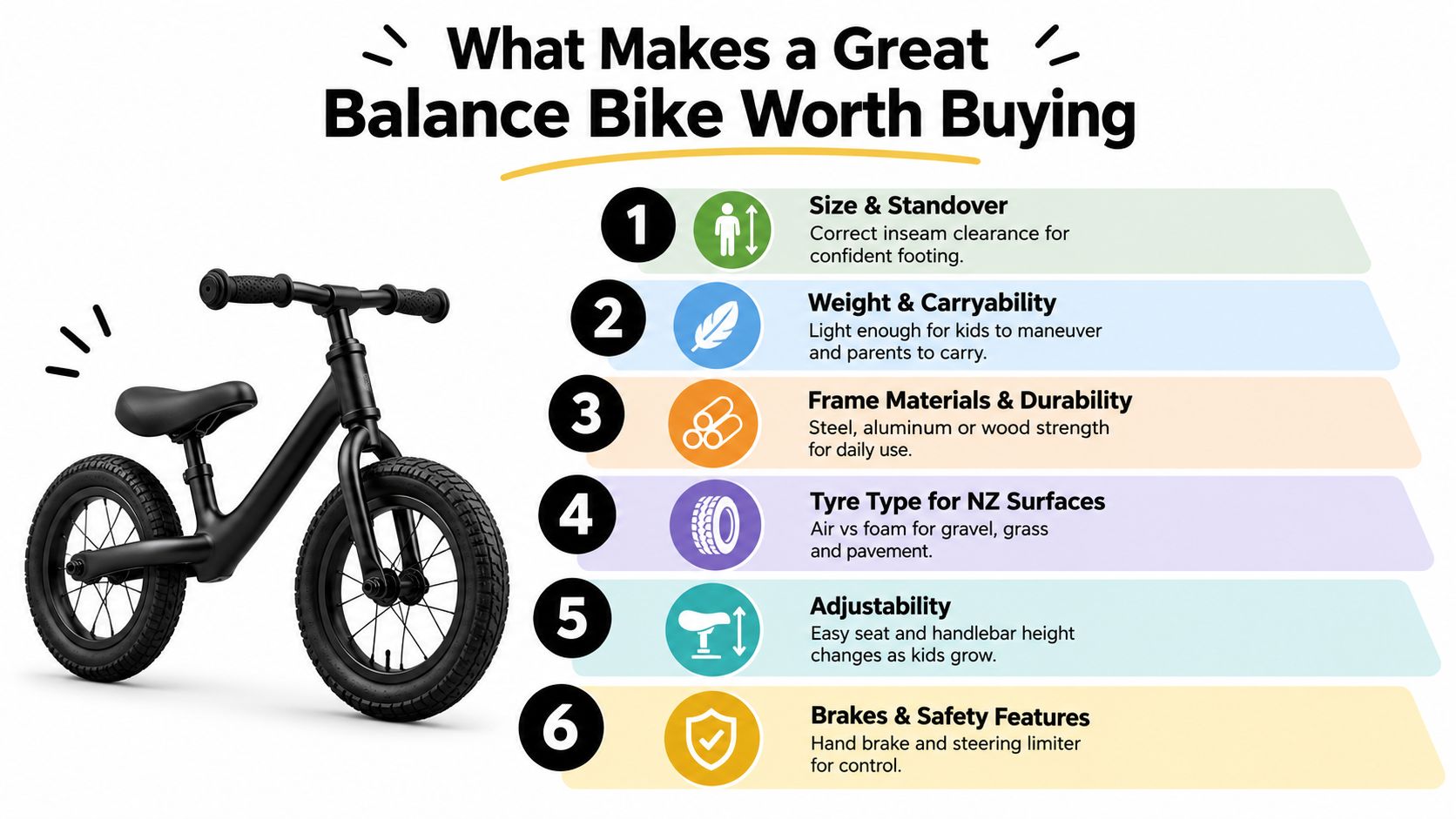
The six things I'd score every time
Saddle and frame fit decides whether the bike gets used. A child needs to step over it cleanly, sit without stretching for the ground, and push off without clipping the frame. If the shape gets in the way, confidence drops fast. Reviews that bury this under wheel size or age guidance miss the point.
Weight comes next, because kids steer with their whole body at first. A lighter bike is easier to point, easier to catch, and easier to stand back up after a wobble. But do not chase the lightest frame if it comes with harsh tyres or poor fit. A bike that saves a few hundred grams but jars across rough seal is not the better buy for many NZ families.
That trade-off matters.
Frame material changes how the bike feels and how it survives family use. Steel usually gives you toughness, but it can push the weight up. Alloy often keeps things lighter and resists rust well. Wood can look smart, but repeated bumps, wet conditions, and limited adjustment make it a weaker choice for everyday outdoor use.
Tyres decide whether the bike suits your rides
Many balance bike reviews treat tyres like a small detail. They are not. Tyres shape comfort, grip, and control more than parents expect.
If your child rides on compacted gravel, grass, patched footpaths, or coarse chip seal, air tyres are usually the smarter pick. They take the edge off bumps and help the bike track straighter. If most rides are on smooth paths and you want less upkeep, foam tyres do the job, but they feel firmer and can skip about more on rough ground. Narrow, hard tyres suit showroom floors better than mixed outdoor riding.
NZ terrain changes the buying decision. A bike that feels quick and tidy in store can feel harsh and twitchy five minutes into a real ride.
Adjustment range matters because good fit changes as a child grows. A useful seat range gives you more than extra months of use. It lets you keep the bike in the sweet spot as confidence builds. Bars matter less on day one, but a sensible bar position becomes more important once the child starts longer glides and tighter turns.
Brake and finishing details should match the rider, not the marketing. Beginners stop with their feet. Children who are already gliding with speed, rolling down slight slopes, or riding rougher paths benefit from a rear hand brake they can reach. Good grip ends, secure clamps, and a sensible steering limit are the quiet details that prevent silly problems.
A great balance bike is simple. It fits the child's inseam, rolls properly on local surfaces, and stays manageable as skills improve. Everything else is extra.
Later in the ride progression, seeing a child use a brake and hold a line properly matters more than a fancy frame finish.
How We Test and Score Balance Bikes
A parent brings in a bike that looked perfect online. Their child climbs on, tiptoes, freezes on the first rough bit of footpath, and wants off within a minute. That is not a confidence problem. It is usually a fit problem, sometimes a tyre problem, and often both.
That is why we score balance bikes by how they work under a real child on real NZ surfaces, not by the age printed on the box.
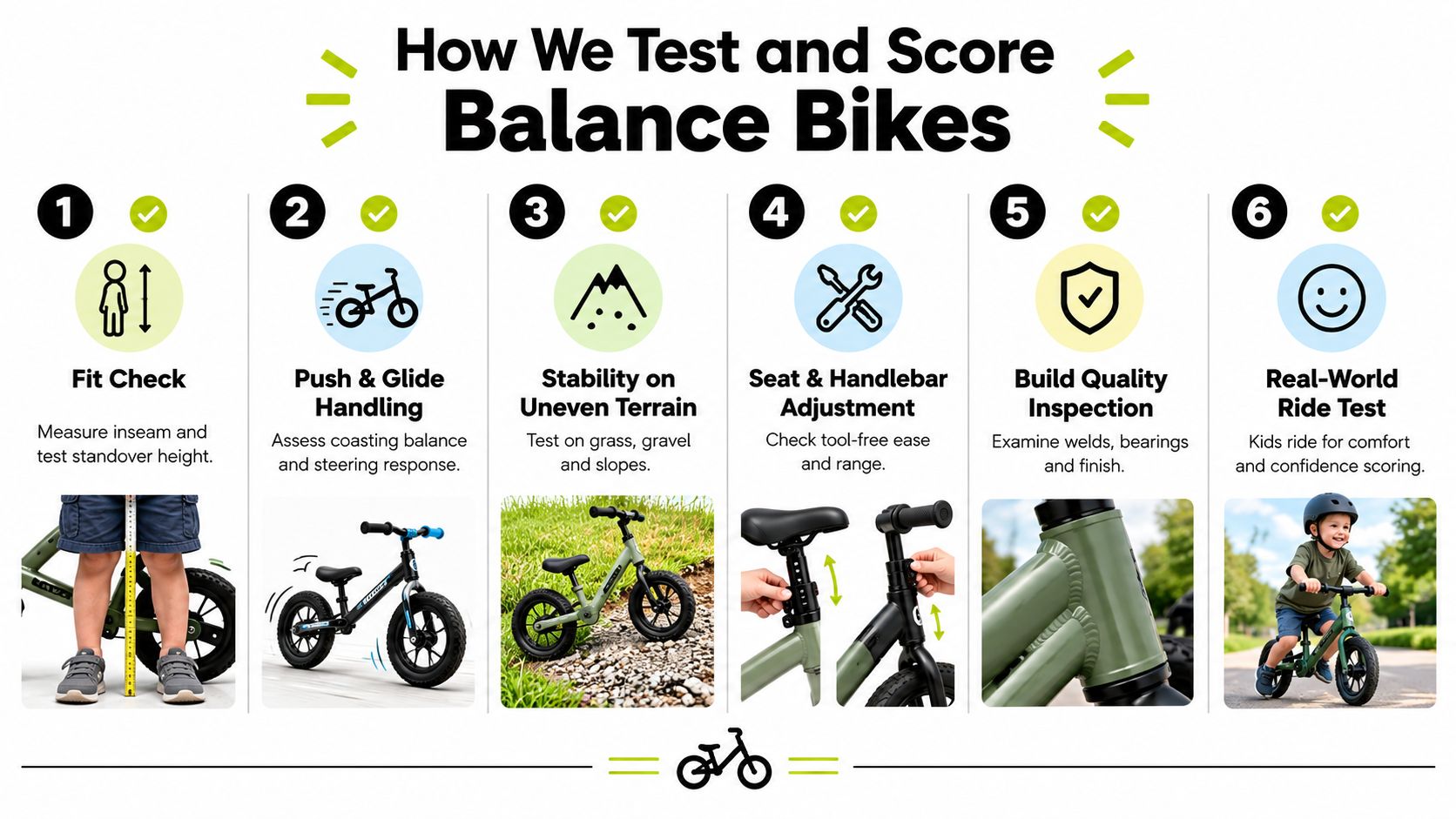
The fit check comes first
The first measurement is simple. We compare the child's inseam with the bike's lowest practical saddle height. For a starter bike, you want enough room for both feet flat on the ground with a slight bend in the knees. That setup changes everything. Kids relax, push properly, and start gliding sooner because the bike feels manageable from the first minute.
Age guides are a weak shortcut. Two four-year-olds can need completely different bikes if one has a shorter inseam or rides mainly on broken footpaths and gravel paths.
Inseam-to-saddle fit predicts early success better than the birthday on the box.
You can see it straight away. A child on the right height starts doing small, repeated pushes and then tests a glide. A child set too high stays stiff through the shoulders, reaches for the ground, and treats every wobble like a near crash.
What the ride test exposes
Once the fit is right, we ride the bike where NZ families use it. That means rough footpath, seal with small cracks, grass edges, and loose park gravel if the tyres are meant for mixed use.
We score four things in motion:
- Push-off ease. The bike should move cleanly without the child fighting weight or drag.
- Steering control. It should hold a line at walking pace and turn without feeling twitchy.
- Surface composure. We check whether the front end skips, chatters, or tracks calmly over imperfect ground.
- Wobble recovery. A good beginner bike lets a child dab a foot, straighten up, and keep going.
This part matters more than showroom feel. Some bikes feel light and tidy indoors, then get nervous and harsh outside. That slows learning because the child spends the ride reacting to the bike instead of practising balance.
Adjustment gets tested too. We raise and lower the seat, check how repeatable the position is, and look at whether parents can make changes quickly without a workshop mindset. If adjustment is fiddly, the bike stays in the wrong position for too long.
How we score the parts that parents do not see in photos
After the ride test, we inspect the basics that affect day-to-day use. Seat clamps need to hold. Wheels need to spin freely without rough bearings. The bar and front wheel need to line up properly. Grips need to stay put after tip-overs. If a bike rattles loose early, parents stop trusting it and kids stop enjoying it.
We also score the bike against its likely terrain. A model built around smooth driveways should not earn top marks if it gets unsettled on rougher paths common around NZ parks and school runs. A stronger score goes to bikes that keep their manners once the surface stops being perfect.
There is useful evidence behind balance bikes as a category. A 2022 review in the International Journal of Environmental Research and Public Health found that children who used balance bikes tended to start independent cycling earlier than children who used bikes with training wheels, with practice and setup playing a clear role in that progress (learning to cycle research).
That matches what we see every week. The bike that teaches fastest is usually the one that fits the child's inseam, rolls calmly on local surfaces, and stays easy to control when confidence starts to grow.
If a seller says your child will grow into it, leave it there. The right bike should work now.
Popular Balance Bikes Compared Side by Side
A child with a short inseam on a heavy bike with hard tyres struggles fast on typical NZ paths. The child stops pushing, starts waddling, and parents blame confidence. The bike is usually the problem.
Brand matters less than three things. Saddle range, total weight, and tyres that suit the surfaces your child rides on. Get those right and the bike teaches balance. Get them wrong and even a popular model feels awkward.
Balance Bike Comparison by Fit and Features
| Model Type | Weight and Material | Tyre and Adjustability | Best For |
|---|---|---|---|
| Lightweight alloy | Light in the hands and easier for small riders to lift and steer | Often has a useful saddle range. Tyre spec varies by model | Small first-timers, cautious riders, and parents carrying the bike often |
| Steel value model | Heavier, usually durable, can feel slower to turn | Adjustment can be decent. Tyres vary from basic foam to better air setups | Families watching spend, bigger beginners, and rough day-to-day use |
| Wooden balance bike | Usually light enough, but frame shape can limit fit options | Adjustment is often more restricted. Tyres vary | Occasional use on smooth ground where the child already fits it well |
| Foam tyre model | Low upkeep | No punctures, firmer ride on rough seal and gravel | Short rides on smooth footpaths, patios, and driveways |
| Air tyre model | Slightly more upkeep | Better grip, more comfort, calmer ride on mixed surfaces | Parks, chipseal paths, gravel edges, grass, and longer outings |
| Brake-equipped model | Slightly more parts and setup to manage | Brake adds control once speed picks up | Older beginners, confident gliders, and kids riding small slopes |
Lightweight alloy versus steel value bikes
For a small child, lighter is better. They can push off cleanly, correct a wobble sooner, and pick the bike up after a tip-over without a fuss.
Steel still has a place. It suits bigger riders and families who are hard on gear. But if the child is near the lower end of the size range, extra weight makes the bike feel like work, especially on slight rises and rough footpaths.
The practical question is simple. Can your child turn it, stop it, and stand over it without looking strained?
Foam tyres versus air tyres
This choice changes how the bike feels more than many parents expect.
Foam tyres suit smooth concrete and short local rides. They are tidy, simple, and fine for a child riding mostly on flat, clean surfaces. On rougher chipseal, park paths, and gravelly edges common around NZ, they bounce more and lose grip sooner.
Air tyres are the better pick for mixed terrain. They take the sting out of coarse surfaces and track straighter when a child is still learning to glide. If your usual ride includes parks, school approaches, or uneven footpaths, choose air.
Wooden bikes versus metal bikes
Wooden bikes win on looks. They rarely win on fit range.
That matters because fit drives learning. A wooden frame can be a good short-trip option if the minimum saddle height suits your child now and the riding is mostly smooth. For regular family use, hand-me-down duty, and mixed surfaces, metal frames are usually the smarter buy because adjustment is broader and the bike tends to cope better with knocks and weather.
When brakes matter
A new rider can stop with their feet. That is fine.
A brake starts to matter once the child is gliding for longer, carrying speed, or riding small downhills. It helps them control speed instead of dragging shoes, and it starts the hand habit they will need on a pedal bike. For a true first bike, fit and tyre choice matter more. For a fast learner on sloped paths, a brake deserves real weight in the decision.
Finding the Right Fit by Age Height and Inseam
Your child climbs on, pushes once, then freezes because their toes barely touch. That is a fit problem, not a confidence problem.
Age gets parents into the right aisle. Inseam gets the right bike under the child. If you remember one thing from any balance bike review, make it this: match the bike's minimum saddle height to your child's inseam, then consider where they will ride in New Zealand.
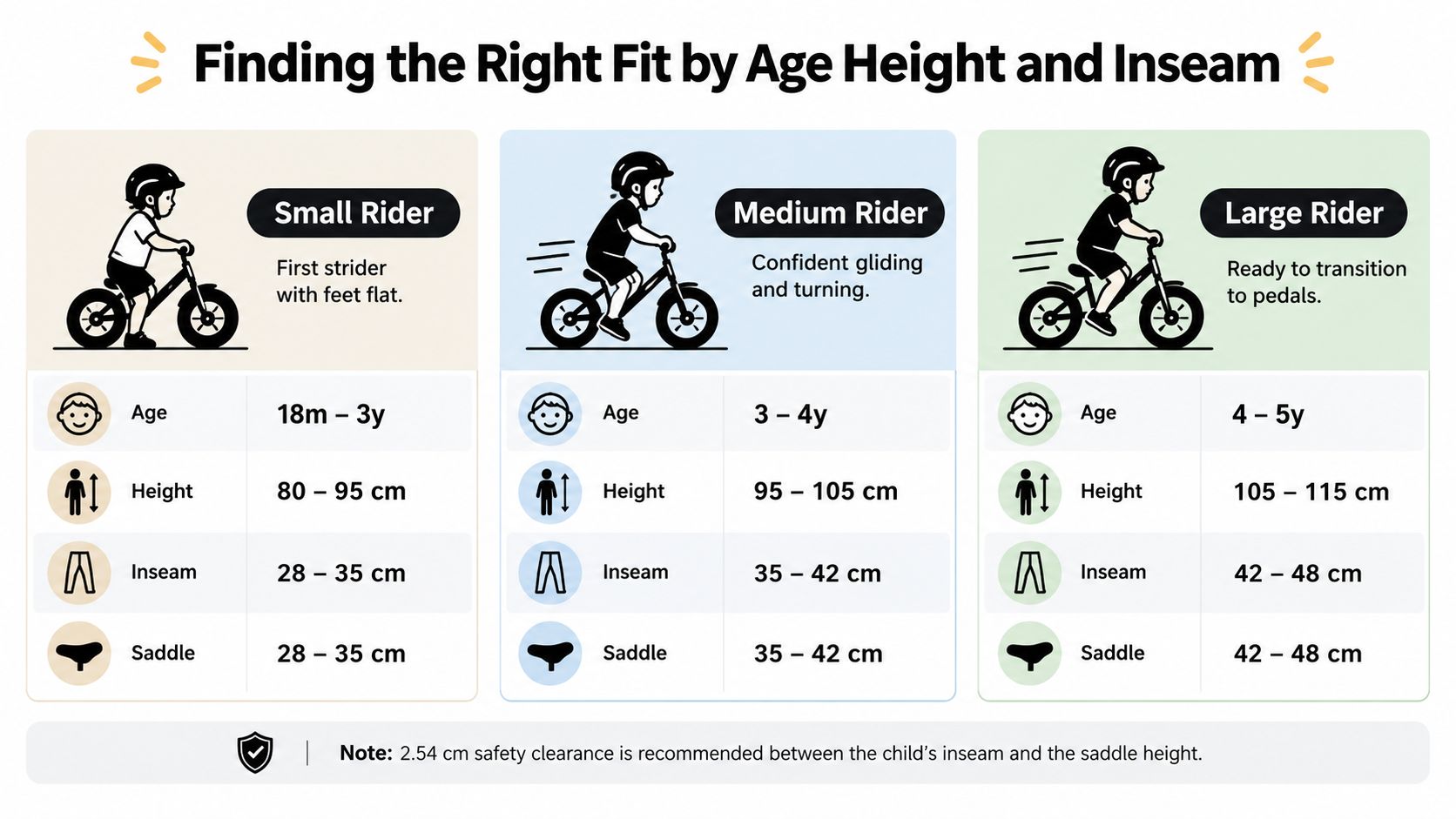
A practical sizing chart
Use age as a rough filter only. Buy on inseam and saddle range.
| Rider size | Typical age guide | Height guide | Inseam guide | Saddle starting point |
|---|---|---|---|---|
| Small rider | 18 months to 3 years | 80 to 95 cm | 28 to 35 cm | Both feet flat, slight knee bend |
| Medium rider | 3 to 4 years | 95 to 105 cm | 35 to 42 cm | Feet flat, room to push and glide |
| Large rider | 4 to 5 years | 105 to 115 cm | 42 to 48 cm | Enough leg room without tiptoeing |
That last column matters most.
A child learning on smooth concrete can manage a fit that is merely acceptable. A child riding coarse footpaths, chipseal driveways, or park edges around NZ needs better control from the start. On rougher surfaces, a saddle set too high shows up fast. The child stops less cleanly, paddles awkwardly, and avoids longer glides because the bike feels unstable.
How to measure properly at home
Do it once. Do it properly.
- Stand your child against a wall in bare feet or thin socks.
- Place a book snugly between the legs at saddle contact height.
- Measure from the floor to the top of the book.
- Check that number against the bike's minimum saddle height.
You want both feet flat on the ground with a small bend in the knee when seated. That position lets a new rider push, stop, and recover balance without panic. If the saddle is too low, they crouch and never glide properly. If it is too high, they start tiptoeing and lose trust in the bike.
If you want a real example of how low saddle range affects smaller riders, this Cruzee balance bike sizing guide for compact frames is worth a look.
Buy for control now, not for growth later.
When to size up
Parents often buy the next size too early and call it room to grow. What they get is a bike the child cannot manage well on real surfaces.
Size up when these signs are clear:
- The saddle is already near the top of its adjustment range
- Knees and hands look cramped while riding
- Your child is gliding calmly and carrying speed with control
- They can stop cleanly and look ready for the extra demands of pedals
A good transition to a pedal bike feels quiet and uneventful. The balance is already there. The child only has to add pedalling and braking.
Safety Checks and Easy Maintenance That Keep Kids Rolling
A well-fitted balance bike still rides badly if the front end is loose, the tyres are wrong for the surface, or the saddle keeps dropping. Kids feel that straight away. On rough Nelson footpaths, chip seal, or gravel park tracks, a small setup problem turns into wobbly starts, hard stops, and less confidence.
In New Zealand, helmet use is required, and NZTA advises young children build skills away from traffic and ride with close adult supervision as noted in its bike safety tips for children.
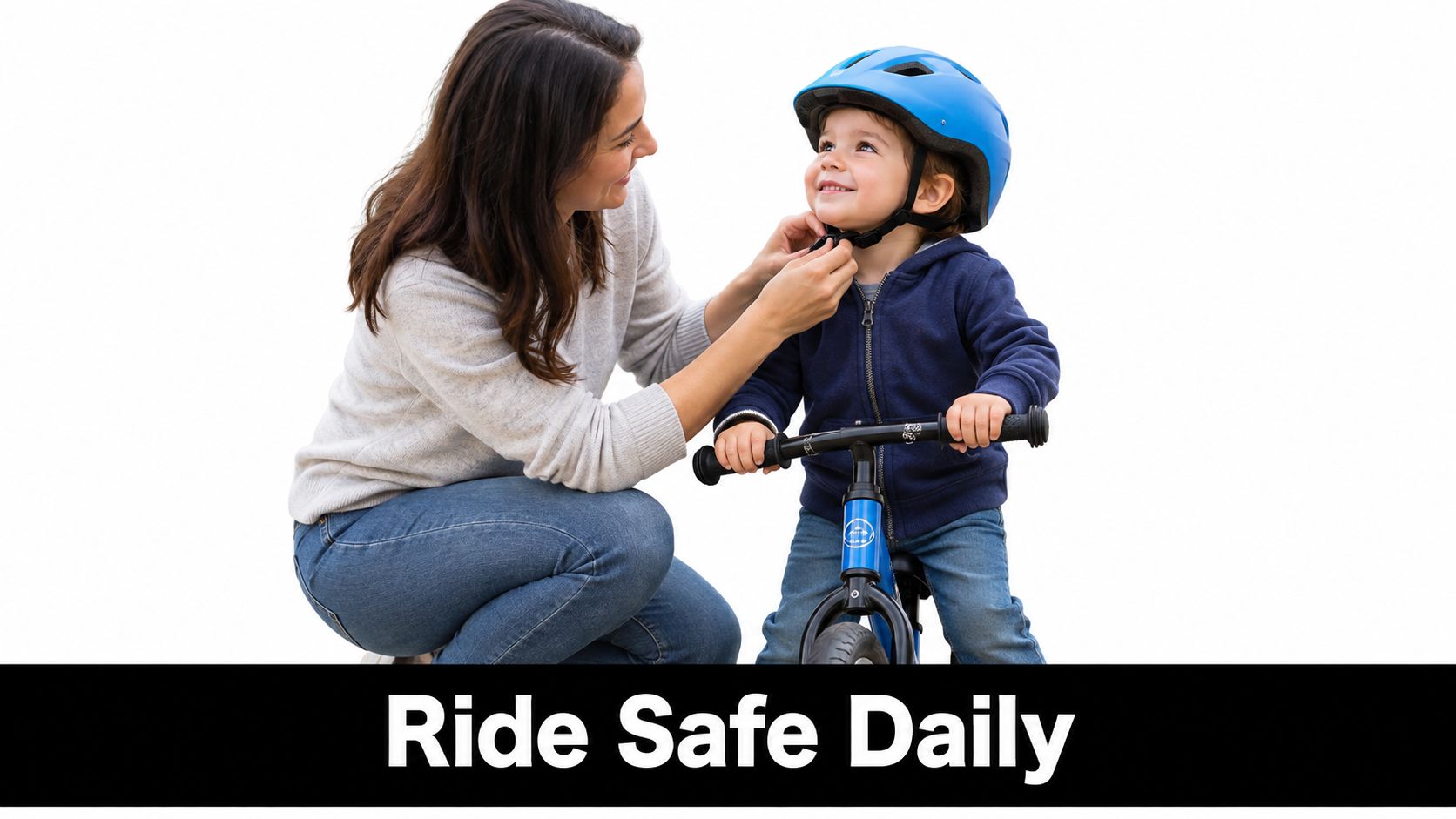
The quick safety routine
Do the same check every ride.
Start with the helmet. It needs to sit level, low on the forehead, and stay put when your child looks down or shakes their head. If you want a simple fit guide, use this balance bike helmet guide for parents.
Then check the bike itself.
- Bars straight and secure: hold the front wheel between your knees and try to twist the handlebars. Nothing should slip.
- Saddle tight at the right height: if the seat drops during a ride, your child loses their flat-footed stance and control goes with it.
- Tyres matched to the ride: air tyres should feel firm, not squashed. Foam tyres should be checked for cracks or flat spots.
- Wheels spinning freely: lift each end and spin the wheel. It should roll cleanly without rubbing or grinding.
- Shoes with grip: smooth soles slide on concrete and sealed paths, especially when kids are learning to stop.
Adult supervision matters most on driveways, near roads, and on any slope. Balance bikes get fast quickly once a child starts gliding.
The five-minute maintenance habit
Most balance bike maintenance is basic, but it affects ride quality more than parents expect. A light bike with poor tyre pressure or a loose headset feels worse than a heavier bike that is set up properly.
Once a week, wipe the bike down and look at the parts that loosen over time. Seat clamps slip. Bolts on the stem and wheels can work loose. Grips can start creeping off the bars. Catch those early and the bike stays predictable.
Pay extra attention if your usual route includes rough seal, gravel, grass edges, or wet paths. Those surfaces shake bikes harder and expose weak setup faster. Air tyres need pressure checks more often. Bearings and metal parts also deserve a quick dry after wet rides or storage in a damp shed.
Quiet bikes usually ride better. If you hear a new rattle, find it before the next ride.
Our Top Picks and Where to Try Them at Rider 18
Here's my blunt take.
Who should buy what
For the smallest first-timers, go light, low, and simple. A low minimum saddle height matters more than flashy features. If your child is just starting, don't get seduced by a bigger frame with “more longevity” if it's too tall today.
For taller toddlers who need room to grow, prioritise seat range and sensible cockpit space. A bike that still fits after a growth spurt is useful, but only if it starts in the right place.
For families riding mixed terrain, choose air tyres over the cheapest foam-tyre option. On rough suburban footpaths, grass edges, and park gravel, that's where the ride quality difference shows up.
If your normal route includes gravel, rough seal, or grass, buy for that reality. Don't buy for the polished showroom floor.
My actual recommendations
Choose a lightweight alloy bike if your child is younger, smaller, or easily put off by awkward handling.
Choose a steel value bike if budget matters and the child is big enough to manage a bit more weight.
Choose air tyres if your rides leave the driveway. Choose foam tyres if your riding is short, smooth, and low fuss.
Choose a brake-equipped bike if your child is already gliding fast or riding on small slopes. Otherwise, fit and handling still come first.
If you want to compare options in person, Rider 18 at 60 Vanguard Street, Nelson stocks balance bikes and can help with in-store fit checks. The shop also offers workshop support, free delivery over $100, and 14-day returns, which matters when you're buying for a child who may sit right on the edge of two sizes.
That's value in balance bike reviews. Not a winner's podium. A clean match between your child's body, your local surfaces, and the stage they're at.
If you want a balance bike that fits instead of one that just looks right online, visit Rider 18. Bring your child's inseam, think about where they'll ride most, and we'll help you narrow it down to the right frame, tyre, and setup without the usual guesswork.


