

24 Inch Childrens Bikes: The Complete NZ Buyer's Guide
- by Nigel
-

You're standing in a bike shop beside a row of children's bikes, or scrolling through an online store with one tab open for prices and another for sizing charts. Your child is somewhere between their current bike and an adult model, and the label 24 inch sounds helpful until you wonder what it measures. Is it the frame, the wheel, or an age range?
For New Zealand families, this is a practical fit and safety decision, not just a choice between cheaper and more expensive models. The Ministry of Transport found that 63% of children aged 5–12 had ridden a bicycle during the previous year, while nearly 70% of households with children owned at least one bicycle during its 2011–2014 national cycling survey. That represents a substantial group of families choosing bikes for recreation, transport and skill development. (Ministry of Transport cycling survey)
A good 24-inch bike should suit your child's body, confidence and usual riding surface. We'll work through the wheel measurement, height and standover fit, brakes, tyres, gearing, safety equipment, test riding and ongoing servicing. If you're also comparing powered options, this guide to safe e-bikes for kids offers useful context around age-appropriate design and supervision.
Why 24-Inch Children's Bikes Confuse So Many Parents
You are choosing a bike for the school route, a local pump track, or weekend gravel, and the label 24-inch seems to promise a simple answer. It does not. Wheel size is only a starting point, much like shoe size: two pairs can share a number yet fit very differently. Frame shape, saddle height, handlebar position and brake-lever reach all affect control.
A child who is comfortable on a 20-inch bike around neighbourhood paths may need a different setup from a confident rider heading onto beginner mountain-bike trails. Before looking at age charts, ask three shop-floor questions: How tall is your child? What bike do they ride now? Where will they ride the new one?
Skill level and riding environment often matter more than age. A school commuter may benefit from a stable position and easy controls, while a child using gravel or trails may need tyres and gearing suited to loose surfaces and hills. Buying a bike to grow into can also backfire if the child cannot reach the brakes or manage the frame today.
New Zealand's cycling survey reported that teenagers and younger children rode during the previous year, with some riding regularly during the previous month. The figures point to different riding habits across age groups, so an age label cannot describe every child's needs.
The question behind the question
You are really asking, “Can my child control this bike today, on the routes they will use?”
Watch whether they can stop without excessive hand pressure, steer without stretching, stand over the frame and recover balance after a wobble. Brake reach deserves particular attention. If a child must move their hand awkwardly to squeeze the lever, confidence and stopping control both suffer.
A 24-inch model can bridge the gap between a smaller children's bike and an adult-style bicycle. It can also be the wrong choice if the frame is too tall, the controls sit too far away, or the components suit an imagined future rather than current ability. For families comparing powered options, safe e-bikes for kids provides further context on age-appropriate design and supervision.
What the 24-Inch Label Measures on a Children's Bike
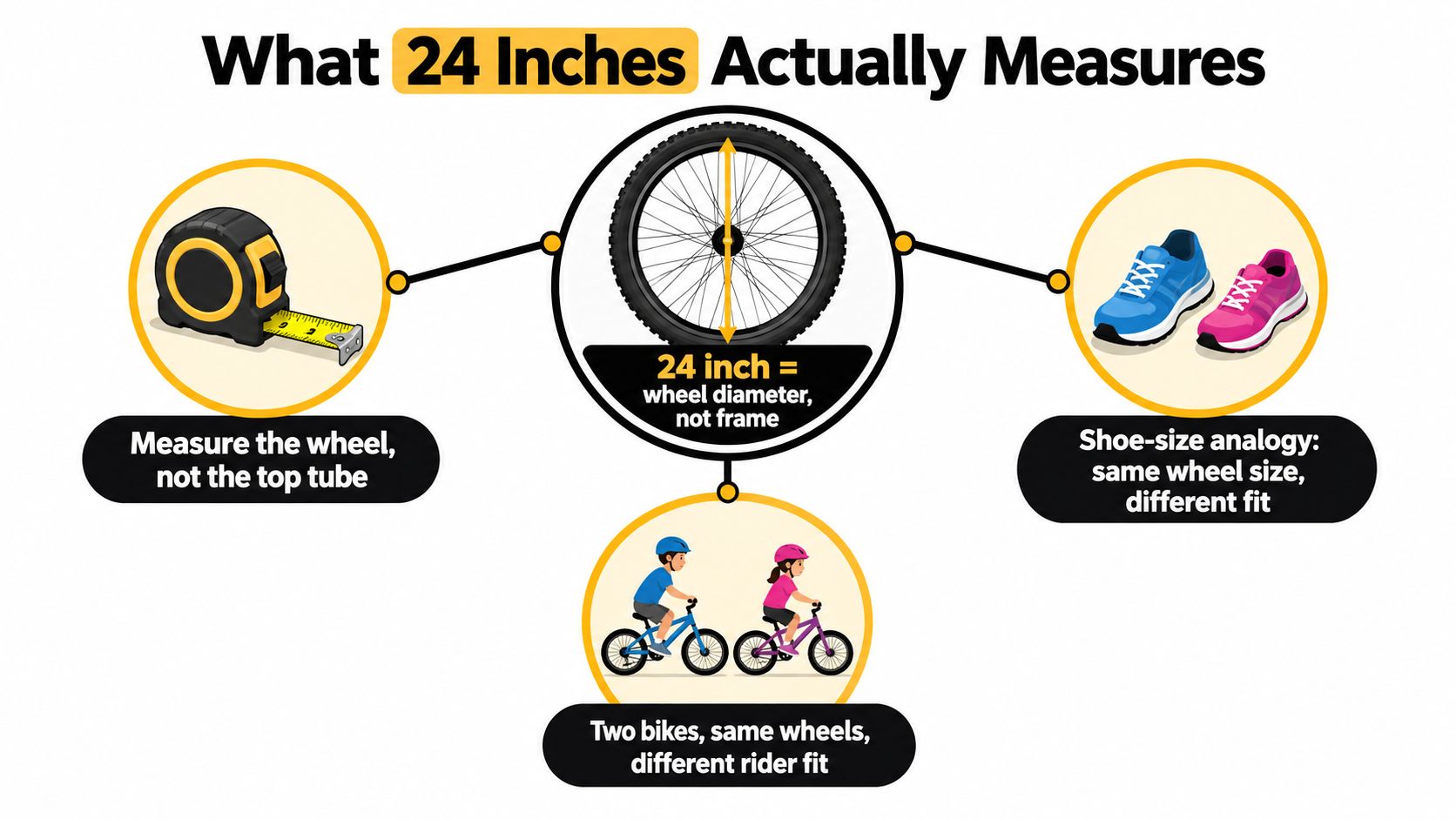
A parent may see “24-inch” online and assume it describes the whole bicycle. It does not. 24 inches refers to the approximate diameter of the bicycle wheel, not the frame's height or length. The top tube, seat tube and overall reach can differ considerably between models using the same wheel size.
Wheel size means wheel diameter. It doesn't tell you the complete bike size or guarantee that the bike fits your child.
The label sets a category, while the frame decides how that category fits. A 24-inch bike with a compact frame may feel manageable, whereas another with a longer reach can leave the same child stretching for the handlebars and brake levers. That difference matters on school routes, gravel paths and beginner trails, where confident control is more useful than a label alone.
Where 24 inches sits in the progression
Children often move through smaller wheel categories as balance, height and riding confidence develop. Balance bikes introduce steering and balance without pedals. Smaller pedal bikes commonly follow, including 12, 16 and 20-inch wheels. A 24-inch bicycle is generally a larger children's step before an adult-style bike with larger wheels.
The sequence is a guide, not a timetable. A child who feels nervous on a 20-inch bike may need practice, better brake reach or a more suitable setup rather than a larger wheel. A tall, confident rider using a pump track or beginner MTB routes may need a different frame sooner. Control, hand strength and the riding environment should guide the decision.
Check the New Zealand standard
Consumer Protection states that new pedal bicycles sold in New Zealand with a wheelbase of 640 mm or greater must comply with the mandatory AS/NZS 1927 bicycle safety standard. Wheel diameter alone does not establish whether the rule applies, so check the bicycle's configuration and compliance information in the listing or with the shop. (Consumer Protection bicycle safety guidance)
Setup still matters after purchase. A compliant bicycle needs correct assembly, effective brakes and controls positioned within comfortable reach. NZTA also requires bicycles used on the road to have good brakes. Check those points alongside a properly fitted helmet before the first ride, rather than treating the wheel label as a complete safety check.
Age and Height Fit for 24-Inch Bikes
A child may look ready for a 24-inch bike on an age chart, yet struggle on the school route or hesitate at the first stop. Wheel size works like shoe size: it narrows the choice, but the fit and the way the child uses the bike decide whether it feels right.
Auckland Transport places a 24-inch wheel bike primarily in the 7–9-year range, for riders approximately 130–145 cm tall. Use that as a starting point, not a pass-or-fail rule. (Auckland Transport child cycling guidance)
Height is a useful first filter because it relates to leg length and reach. Skill level and riding environment matter just as much. A confident child riding gravel paths, a pump track or beginner MTB routes may need a different frame shape from a child using a flat school route. A nervous rider may need more practice and easier brake reach before moving up a wheel size.
A quick sizing reference
| Wheel Size | Approx. Rider Height | Typical Age |
|---|---|---|
| 12 inch | Varies by model and child | Early pedal-bike stage |
| 16 inch | Varies by model and child | Younger children |
| 20 inch | Varies by model and child | Intermediate children's-bike stage |
| 24 inch | Approximately 130–145 cm | Primarily 7–9 years |
| Adult-style wheels | Depends on frame design and fit | Older or taller riders |
The table shows how the categories generally line up. It cannot account for frame geometry, inside leg, torso length, arm length or confidence. Sit your child on the actual bike and check their position. A practical kids tennis racket guide makes the same point about child-sized equipment: age charts help you begin, then fit settles the decision.
Why standover and brake reach matter
Your child should stand over the frame without contacting the top tube. They should reach both brake levers with relaxed hands and squeeze firmly without sliding their grip forward. Test this while they are wearing the helmet they will ride in, since posture and comfort still need to feel natural.
An oversized frame can reduce balance and braking control. The child may lean awkwardly, hesitate at stops or struggle to place a foot down. An undersized frame brings different problems, including cramped knees and arms, twitchy steering and uncomfortable pedalling.
Buying to grow into sounds economical, but a bike that fits later may be difficult to control today. Choose the largest size the child can handle confidently now, with sensible saddle adjustment left for growth.
Frame Features and Components That Matter Most
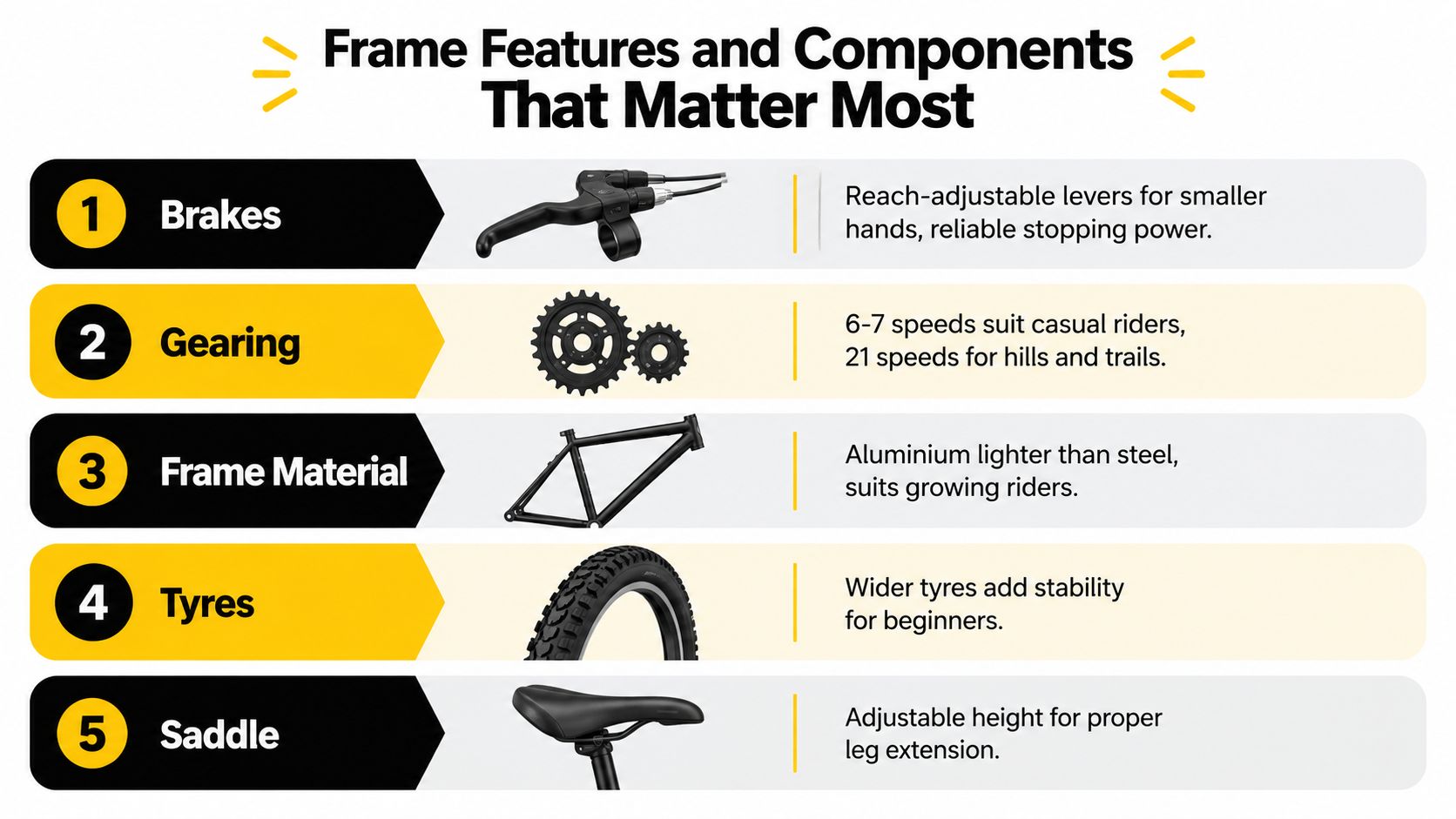
The right component depends on the surface beneath the tyres. A child riding a sealed school route doesn't need the same specification as a confident rider using gravel paths or beginner mountain-bike trails. Start with control, then add capability where it will be used.
Brakes come first
Look for brake levers that suit smaller hands and can be reached without the child sliding their hand forward. The lever should move smoothly, and the brake should slow the bike decisively without requiring excessive force.
For a school route or neighbourhood riding, well-set-up rim brakes may be perfectly suitable. A trail-focused 24-inch bike may use disc brakes, but the label alone doesn't make it safer. If the child can't reach the lever or modulate the braking, the advanced system hasn't improved control.
Match gearing to the route
A single-speed bike keeps operation simple and can suit flat paths or a rider who is still learning. Multiple gears help on hills, longer rides and mixed surfaces, provided the child understands how to change them.
A child who regularly rides steep streets may benefit from a wider range. A child using a flat path may find too many controls distracting. Ask whether the rider will use the gears confidently, rather than selecting a specification because it sounds more advanced.
Choose tyres for the ground
Smooth, narrower tyres can roll easily on sealed paths. Wider tyres with useful tread can provide a more stable feel on gravel, grass and light trails. Pump-track riding calls for predictable handling and a tyre pressure suited to the rider and surface, not just the lowest pressure available.
Frame weight matters as well. A lighter bike is easier to lift, start and manoeuvre, but a lower number on the scales doesn't automatically make it safer.
A lighter or more advanced 24-inch mountain bike isn't safer if your child can't reach the brakes, control speed or put a foot down.
Suspension is a use-case decision
For ordinary school routes and sealed paths, a suspension fork can add weight without giving the child a meaningful benefit. A rigid fork may be simpler and easier to handle. For regular beginner MTB riding, suspension can have a place, but only when the rider has the skills and routes to justify it.
National evidence reports that children aged 10–14 had the highest rate of non-motor-vehicle traffic injuries, at roughly 42 injuries per 100,000 children, and earlier New Zealand evidence found that this group accounted for 57% of child cyclist hospitalisations. (Safekids Aotearoa injury prevention data) Those figures don't mean a particular component causes injury. They reinforce why stable geometry, dependable braking and appropriate tyre grip deserve more attention than impressive-looking specifications.
Safety Gear and Accessories for Young Riders
A child leaving for school on a grey morning needs more than a bicycle that fits. Helmet fit, visibility and braking habits work together, so safety gear belongs in the buying conversation from the start.
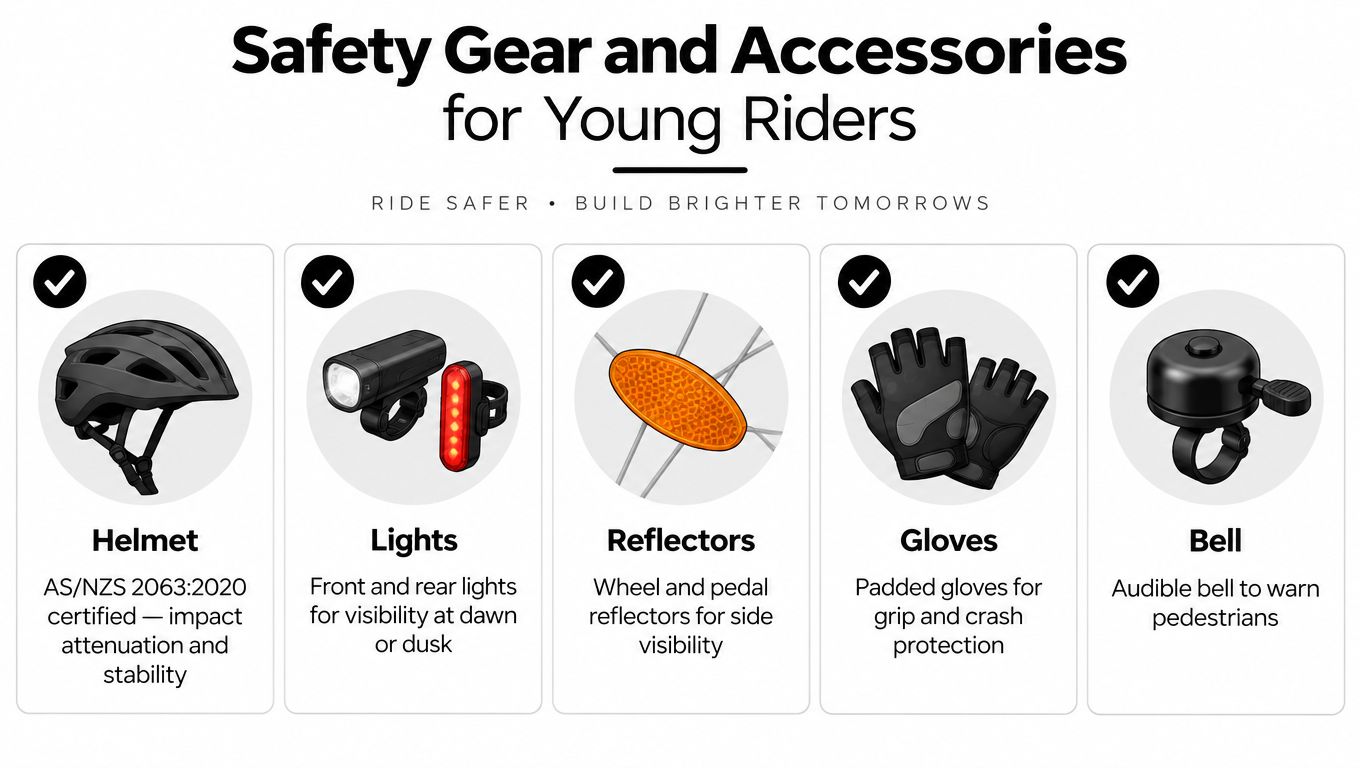
The helmet should sit level, cover the forehead and remain stable when your child turns their head. New Zealand's AS/NZS 2063:2020 standard covers impact attenuation, stability, retention-system strength, peripheral vision and marking requirements. Choose an approved helmet that your child can fasten correctly and wear comfortably.
Visibility is part of control
Lights and reflective details help when a school ride starts early, finishes late or passes through shaded streets. Bright clothing makes the rider easier to see, while a bell gives them a clear way to alert pedestrians on shared paths.
Gloves can improve grip and protect hands during a minor fall. Comfortable grips, secure shoes and a properly adjusted saddle also reduce fidgeting, leaving more attention for steering and braking. These small details matter on gravel, shared paths and beginner MTB routes, where control changes with the surface.
Supervision must match development
Children judge traffic speed and movement differently from adults. Transport-policy evidence explains that this ability develops gradually and is not fully developed until around age 12. The same consultation material notes that 70% of children already cycle on footpaths, and records Police and transport-agency guidance that children under 10 should ride on the road only with a competent adult rider. (New Zealand transport safety evidence)
Road safety figures support a careful route plan. New Zealand's Road to Zero analysis recorded 145 children under 15 killed in road crashes and more than 4,600 hospitalised during the period examined. It also recorded 92 cyclist deaths and more than 1,700 serious cyclist injuries on New Zealand roads between 2008 and 2017. Children aged 10–14 generated 3,166 ACC claims related to bicycle injuries during a recent six-month period, the highest injury group.
Wheel size alone cannot decide whether a route is suitable. Consider crossings, traffic, shade, visibility, the child's judgement and whether an adult can supervise actively. For practical advice on choosing and fitting children's helmets in New Zealand, use the Rider 18 guide.
Your Test-Ride and Fit Checklist Before Buying
A five-minute test ride can reveal more than an online size chart. Bring your child in ordinary riding clothes and let them handle the bicycle rather than judging the fit from the saddle alone.
Check the stationary fit
- Stand over the frame: Your child should stand over the top tube without contacting it.
- Reach both brakes: They should operate both levers fully without stretching or moving their hands from a secure grip.
- Check saddle height: At the bottom of the pedal stroke, the knee should retain a slight bend.
- Find a stable position: Your child should be able to get a foot down when stopped without leaning the whole bike sharply.
- Watch the reach: Elbows should remain relaxed and slightly bent, not locked while the child stretches towards the bars.
Watch the moving test
Use a safe, open area for a short ride. Ask your child to start, pedal slowly, stop, turn and look over one shoulder. You're checking whether the bicycle feels predictable, not whether they can ride at speed.
- Starting: Can they set off without wobbling across the path?
- Stopping: Can they slow and stop using both brakes calmly?
- Cornering: Do they turn without leaning excessively or catching a pedal?
- Control: Can they look around while keeping a steady line?
- Noise and movement: Listen for rattles, rubbing brakes or a loose headset.
Correct assembly matters. Brake cables, lever positions, wheel quick-releases, saddle bolts and pedals should all be checked before the first proper ride. A chain guard can also be worthwhile for younger riders or bikes used for commuting, especially where trousers or shoelaces could catch.
For another way to understand the relationship between frame measurements and rider fit, use this bike frame size chart. The final decision should still come from the child's hands, feet and confidence on the actual bicycle.
Maintenance, Buying and Servicing with Rider 18
A well-fitted 24-inch bike stays safer when the family checks it regularly. Before rides, squeeze the brake levers, look at the tyres, check that wheels are secure and listen for new noises. Keep the chain clean and lubricated, and check bolts when the bike has been used on rough paths or transported frequently.
Rider 18 is a Nelson bike shop and online store with more than 30 years of two-wheeled experience. Its range includes children's bikes, helmets and accessories, with workshop support for assembly, repairs and routine servicing. Families can visit the Vanguard Street store for an in-person fit, or use nationwide shipping with free delivery over $100 and 14-day returns.
A local workshop also gives you somewhere to go when a child grows, a brake needs adjustment or a drivetrain starts shifting poorly. Rider 18 carries products from brands including Shimano, ABUS and Maxxis, alongside bikes and maintenance equipment.
For hands-on guidance after purchase, this professional bike maintenance guide covers practical workshop habits and care.
A 24-inch bike should be treated as a maintained piece of safety equipment, not a disposable item. Brake pads wear, tyres lose pressure and children can quickly outgrow a previously comfortable position. A quick inspection and timely service keep the original fit decision working for longer.
Choosing with Confidence
A good 24-inch children's bike comes down to a few clear decisions:
- Fit by height, reach and standover clearance, not age alone.
- Prioritise brake reach and calm control over a long list of advanced parts.
- Match tyres, gearing and frame design to school routes, gravel, pump tracks or beginner MTB riding.
- Buy the helmet and visibility equipment as part of the riding setup, not as an afterthought.
- Let your child test ride the bicycle before you commit.
The right bike should feel manageable from the first pedal stroke. Your child should be able to start, steer, slow down and stop without fighting the machine. That confidence creates the foundation for longer rides and more independent cycling as their skills develop.
Rider 18 offers 24-inch children's bikes, helmets, accessories, workshop servicing and in-person fit advice at its Nelson store. Visit Rider 18 with your child, or shop online, to find a bike that matches their height, control and real riding environment.


