

Mountain Bike Accessories Gifts for Every Rider
- by Nigel
-

You've got a birthday or Christmas deadline, a rider who already seems to own everything, and a browser full of gloves, lights and tools that all look useful. Picking mountain bike accessories gifts isn't hard because options are scarce. It's hard because the wrong size, wrong standard or wrong discipline turns a thoughtful present into garage clutter.
Choosing a Gift That Fits the Rider
A shiny multitool is a classic trap. It looks clever, it's easy to wrap, and the rider in your life may already own two, or may own a bike whose bolts it doesn't fit well. The same problem hits helmets bought by colour, gloves bought by guess, and tyres bought because the tread looked aggressive.
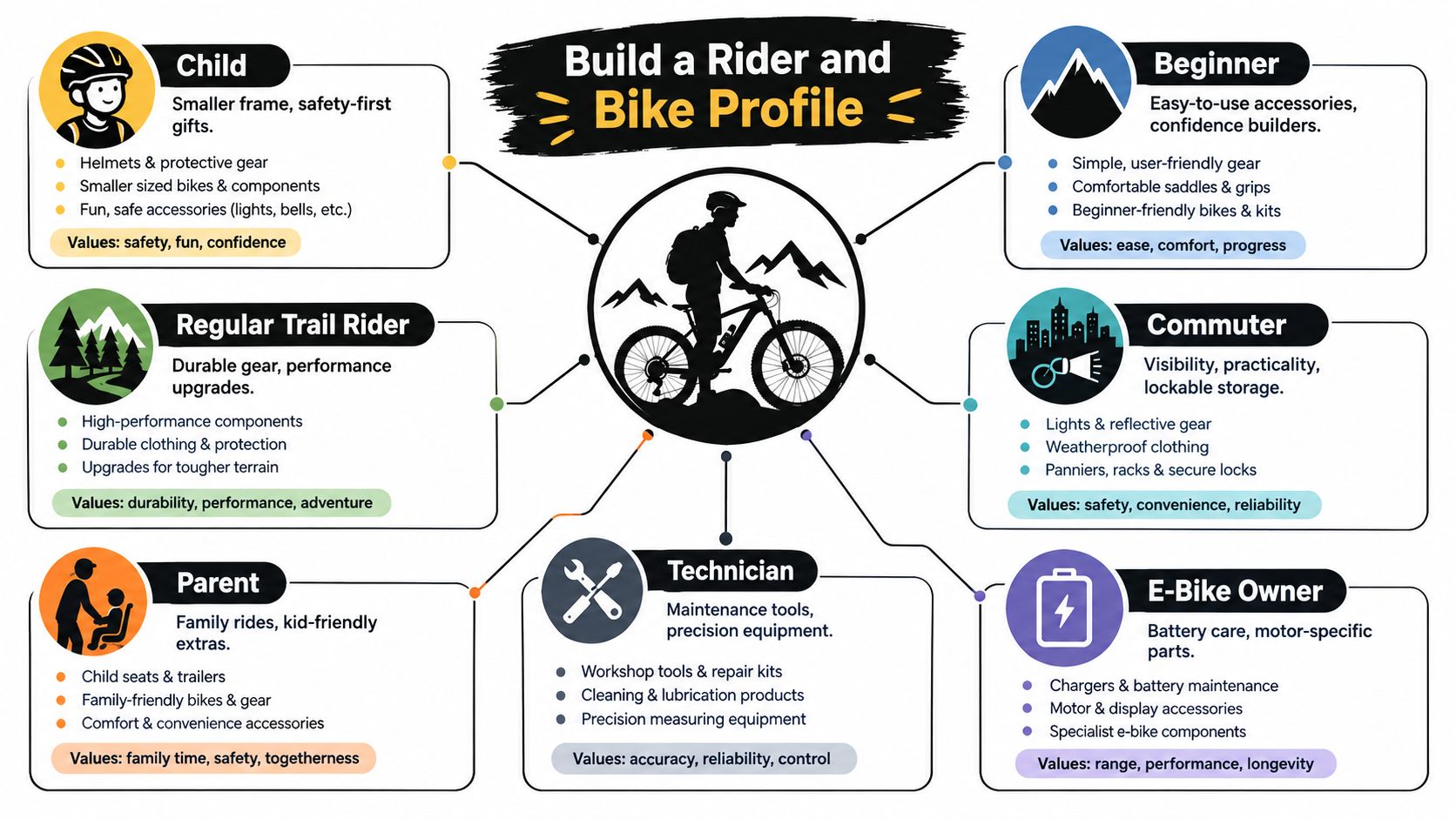
My rule from the shop floor is simple. Don't start with a product. Start with the rider, the bike and the ride they do. A commuter crossing Nelson before dawn needs visibility and weather protection. A teenager at the bike park needs fit-checked protection. A regular trail rider needs durable kit that handles repeated washing, mud and knocks.
Running shoes work the same way. You wouldn't buy trail shoes for someone who only walks on pavement just because they look tougher. On a bike the mismatch is worse, because fit, standards and intended discipline affect safety, not just comfort.
Questions to Ask Before You Browse
- Age and confidence: Is this a child, a nervous beginner or an experienced rider pushing harder terrain?
- Bike type: Is it a hardtail, full-suspension trail bike, gravel bike, commuter or e-MTB with a removable battery and display?
- Trip reality: Are rides short and local, or long, wet and far from help?
- What they already own: Replacing worn gloves is generous. Duplicating a good pump isn't.
There's a wide audience behind these choices. Sport New Zealand's 2013 to 2014 cycling profile found that 24.8% of adults aged 16 and over participated in cycling or mountain biking in the previous year, including 8.8% in mountain biking. That breadth is exactly why a generic bestseller list fails. You're not buying for mountain bikers in general. You're buying for one person, one bike and one set of habits.
If you can't name the ride the gift improves, you aren't ready to buy it yet.
Answer the questions above and you'll know whether you're shopping for protection, reliability, comfort, security or an experience.
Build a Rider and Bike Profile
Frequency changes everything. Someone who rides monthly on dry rail trails doesn't need the same kit as someone loading the car every weekend, and in New Zealand the committed end of that spectrum is large. Scion Research reporting on a 2023 survey of 2,073 mountain bikers found that 79% rode at least weekly and 91% travelled more than 120 minutes one way for distant riding. Weekly use wears out gloves, brake pads and tyres, so consumables become welcome. Long trips reward portable, durable and trip-ready gear.
Before you choose a category, note down bike type, typical trip length, weather exposure and where the bike sleeps at night. Storage matters more than people admit. A bike kept in a shared apartment block needs different security thinking from one locked in a private garage.
Match the Gift to the Rider
| Rider or ride profile | Primary need | Gift direction | Check before buying |
|---|---|---|---|
| Child on a first MTB | Safety and fit | Helmet, gloves, bell | Head size, growth room |
| Beginner adult | Confidence and ease | Floor pump, bottle and cage, basic tools | Valve type, frame mounts |
| Regular trail rider | Durability | Tyres, grips, hydration pack | Wheel size, current setup |
| Commuter | Visibility and security | Lights, lock, waterproof cover | Charging access, parking spot |
| Parent riding with kids | Carrying capacity | Kids ride seat, rack, larger pack | Frame compatibility, child weight |
| Home technician | Precision | Torque wrench, work stand | Existing tool collection |
| E-bike owner | Battery and security care | Spare charger storage, heavy lock, frame protection | Battery, display and charger model |
E-Bike Checks Are Non-Negotiable
For an e-bike owner, record the motor system, battery type, display and charger before buying anything electrical or frame mounted. Accessories that clamp, plug in or carry weight near the battery must suit that specific bike. Guessing here creates returns, or worse, damaged ports and scratched frames.
Once the profile is clear, the shortlist writes itself. You're no longer choosing between hundreds of products. You're choosing between two or three that fit a described job.
Choose Protection and Riding Essentials
Protection comes first, and it must match exposure. A New Zealand Medical Journal study of 263 enduro riders found that 55% reported an injury requiring at least one week away from work, nearly 20% reported a month or more away, and more than 40% had continuing symptoms. Those are enduro racers, not casual trail users, but the lesson scales down. Harder, faster and steeper riding justifies stronger protection.
Start With the Helmet
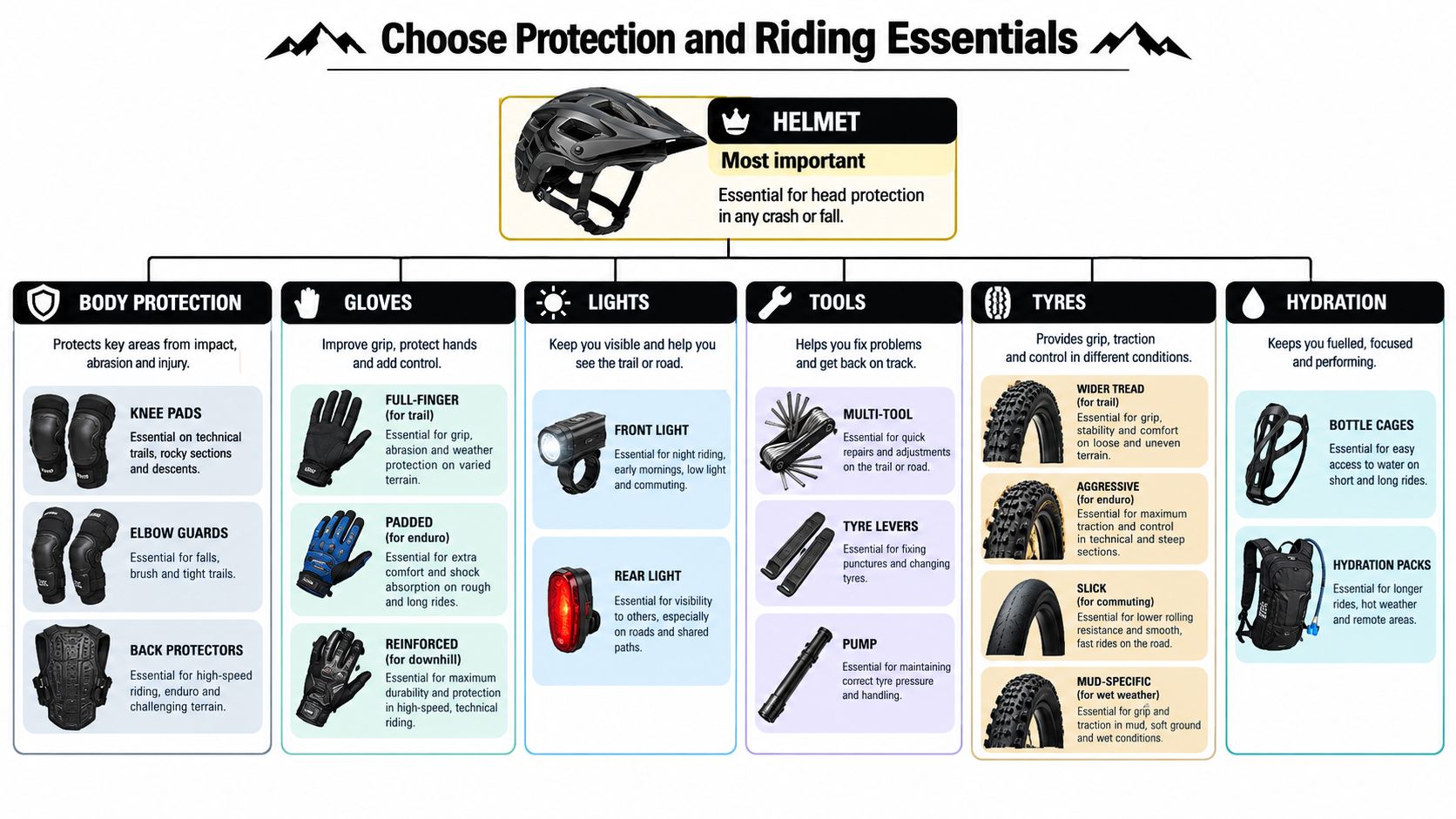
Buy a helmet for the discipline, not the paint job. Look for secure retention, adjustability, ventilation and generous rear coverage for trail use. For enduro, downhill and bike park riding, step up to a certified full-face helmet and impact-rated eyewear.
Fit decides whether it gets worn. A helmet that pinches or overheats stays at home, so let the rider try it on where possible, or buy from a shop that will exchange an unworn size. The same logic applies to body protection. Our own guide on choosing knee pads in New Zealand covers sizing and coverage, and the principle is transferable. Pads must stay put while pedalling, not just look right standing in a shop.
Gloves follow a similar pattern. Full-finger gloves suit trail riding and cooler weather, padded palms help on long descents, and reinforced knuckles suit aggressive terrain. Don't buy the burliest option for a rail trail rider who'll find them hot and stiff.
Then Cover the Ride Itself
Watch how a well-packed rider organises essentials before you commit to tools or storage, because carrying method shapes what you should buy.
- Lights: Front and rear lights are commuter essentials and sensible insurance for trail riders who misjudge sunset.
- Tools: A multitool, tyre levers and a pump such as the Topeak Mountain Dual Action Mini Pump cover most trailside fixes.
- Tyres: Match tread to terrain, wider and grippier for wet roots, faster rolling for hardpack and commuting.
- Hydration: A bottle and cage suits short rides, a hydration pack suits long days when refills aren't guaranteed.
Pairing that works: Couple a durable item with a consumable the rider burns through, such as a pump with tubeless sealant, or gloves with a spare set of grips.
That pairing signals you understand riding as an ongoing cost, not a one-off purchase. It's the difference between a gift that's admired once and one that's used every week.
Compare Physical Gifts and Experiences
Some riders don't need more objects. They need a working bike, a new trail, or a first taste of riding before anyone spends serious money. Choosing between a physical gift, a voucher and an experience is a decision about the recipient, not your budget.
Physical accessories deliver lasting value when you know the profile well. A correctly fitted helmet, a quality lock or a dependable pump gets used for years. The risk sits entirely with you, because you chose the size, standard and style. Buy physical when you're confident about fit and compatibility, or when the item is universal, like a floor pump or a good set of tyre levers.
When a Voucher Beats a Box
A workshop voucher suits the rider whose bike grinds, skips gears or hasn't seen a service in far too long. You're not guessing at parts. You're paying for a mechanic's diagnosis, which is often what the rider needs but keeps postponing. Vouchers also work for picky riders who research every gram, since the final choice stays with them.
The trade-off is timing and effort. A voucher only helps if the recipient books in, drops the bike off and collects it. If they live far from a shop or ride daily for transport, check how practical that is first.
When an Experience Wins
Bike hire or a guided ride is the right gift for someone curious about mountain biking who owns nothing yet. They get a properly sized bike, local trail knowledge and a memory, without you funding a helmet in the wrong size. Experiences also suit visitors and families who'd rather ride together than unwrap gear.
Check the hidden requirements before booking. Does the recipient have transport to the trailhead, suitable clothing and enough confidence for the grade you've chosen? A guided ride pitched above their ability isn't a treat. Ask a local Nelson shop what hire and workshop options are currently available, what sizes are held, and whether helmets are included, and confirm service details at the time you buy rather than assuming last season's arrangements still apply.
Set a Practical Gift Budget
Forget price lists. Think in tiers based on how the gift will be used, then spend within the tier that matches the rider's commitment.
Entry level covers simple, useful items for occasional riders. A bottle and cage, a basic multitool, tyre levers, a mini pump, riding socks or a puncture repair kit all earn their keep without demanding compatibility detective work. These are also the safest gifts when you don't know the bike well, because most are broadly universal.
Mid range is where durability starts. Better gloves, a hydration pack, a solid light set, a dependable lock or a coordinated bundle, such as a pump plus tools plus a saddle bag, suits someone riding most weeks. One good item beats three mediocre ones at this level, because regular use exposes weak zips, dim lights and soft tool steel quickly.
Premium means technical equipment or valuable experiences. A certified full-face helmet, quality body armour, a substantial e-bike lock setup, a workshop overhaul or a full day of hire with guiding sits here. Premium only makes sense when fit and compatibility are confirmed. Spending heavily on the wrong size doesn't become generous just because it was expensive.
How to Trade Quantity for Quality
- Prioritise the worn item: A helmet or pair of shoes the rider tries on beats a basket of novelties.
- Check for duplication: Ask a partner or riding mate what's already in the garage before you spend.
- Bundle around one job: Rainy commute, puncture repair or night visibility each make a coherent, affordable theme.
- Use a voucher as a safety valve: When two options are close, let the rider make the final call.
Set the tier first, then compare two or three alternatives in person. A sensible budget isn't the lowest number you can spend. It's the amount that buys fit, compatibility and regular use without waste.
Prepare for Weather, Breakdowns and E-Bike Risk
Most gift guides stop at shiny upgrades. I'd rather give someone the kit that saves a ride. The 2025 evaluation of Ngā Haerenga Great Rides reported that 14% of users encountered adverse weather, 6% experienced equipment failure and 5% reported an injury, while noting that reporting was incomplete. Weather, mechanicals and minor crashes aren't edge cases. They're the predictable texture of riding here.
Build a Ride Resilience Kit
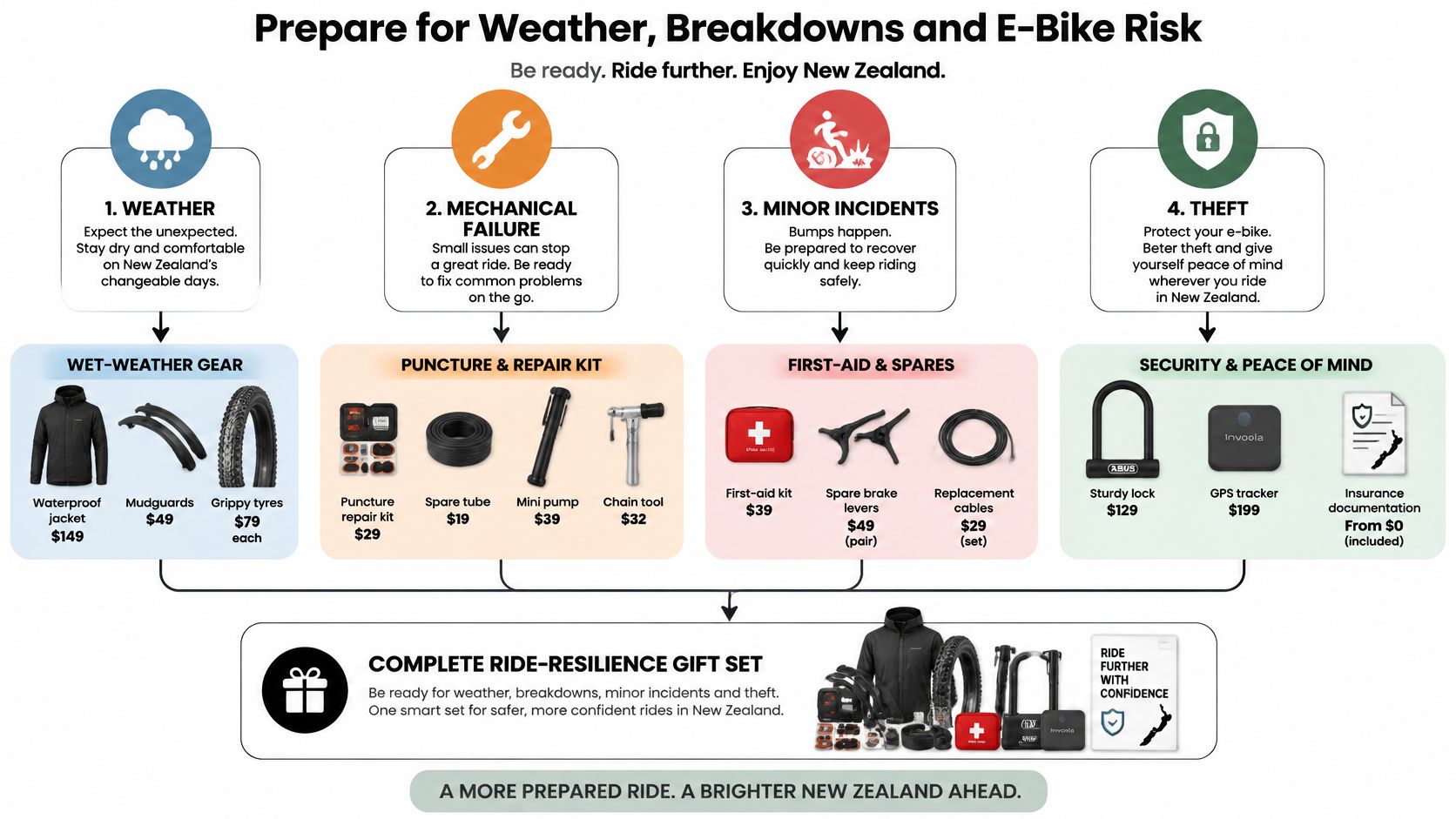
For a two hour local ride, pack for the walk out scenario. A multitool, tyre plugs or a spare tube, a mini pump, a phone with charge, water and a light layer cover most endings. Our breakdown of what belongs in a tyre repair kit shows how little space that insurance takes.
For an all day or remote ride, add depth. Include a chain quick link and chain tool, a small first aid kit, a proper waterproof jacket, extra food, a rear light and an emergency communication plan shared with someone at home. Remoteness, not distance alone, decides the list. A short ride with no reception deserves the same respect as a long one.
Weather protection deserves its own budget line. Mudguards, a weather resistant jacket, merino layers and gloves that still grip when wet turn a miserable ride into a manageable one. Riders rarely buy this kit for themselves, which makes it excellent gift territory.
Secure an E-Bike in Layers
One expensive lock isn't a security plan. Think in layers matched to the situation.
- At home: Anchor the bike in a locked space where practical, and store the battery and charger thoughtfully, away from damp and impact.
- At the trailhead or café: Use a suitably rated lock through the frame and a wheel, and lock to something fixed, not just to the bike itself.
- For the removable parts: Take the battery and display with you when practical, since they're valuable and easily carried.
- For recovery: Record the serial number, keep purchase documents, and consider compatible tracking or registration options.
Weight and frame shape complicate e-bike locking, because a lock sized for a slim hardtail may not reach around a down tube housing a battery. Check dimensions against the actual bike. Battery care gifts, such as a padded carry bag or a tidy charging station at home, solve daily annoyances that lock lists ignore.
Match Gifts to Common Riding Profiles
Same budget, five different people. Here's how I'd spend it on the shop floor.
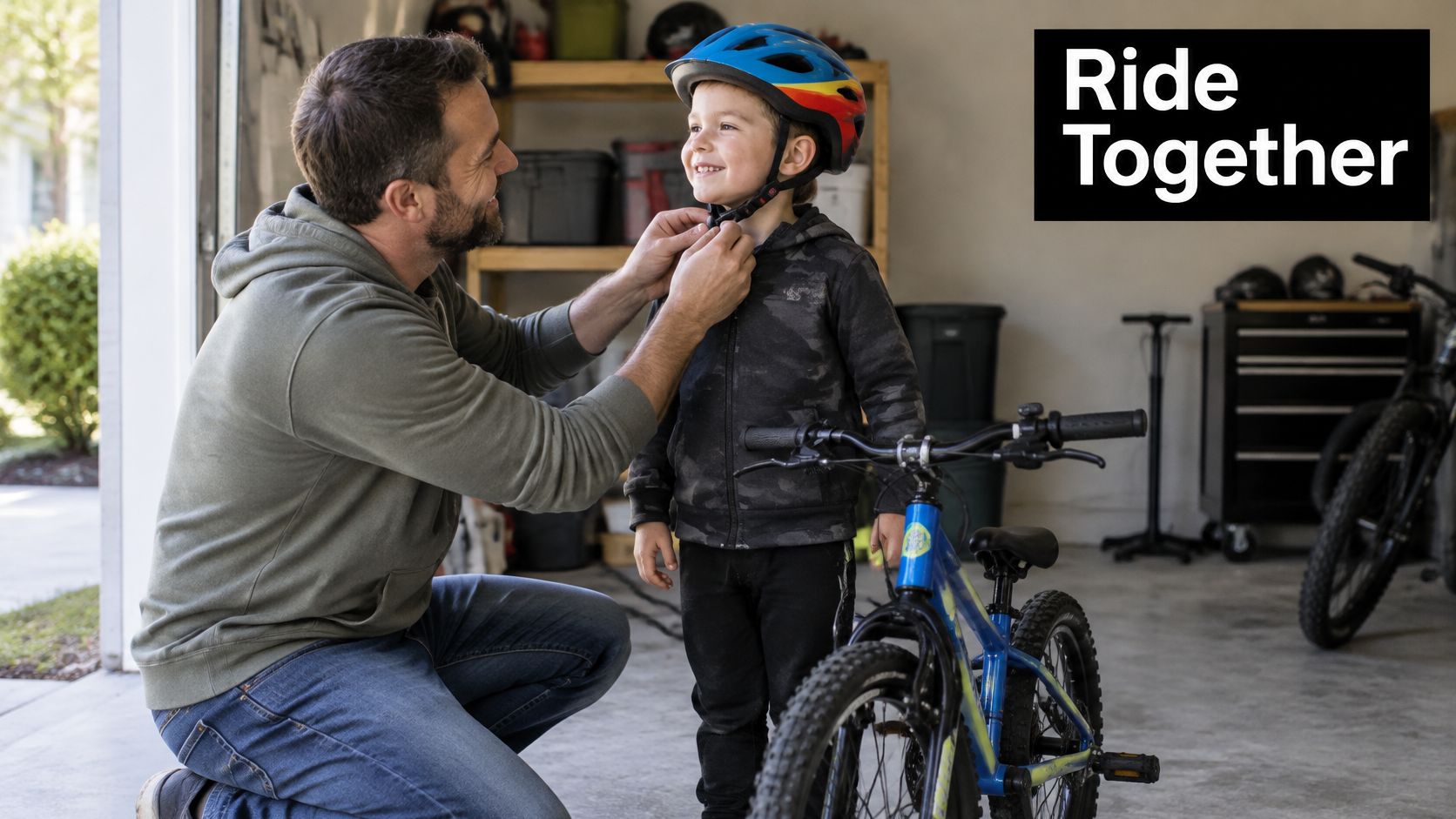
The parent buying for a child should start with a helmet fitted in person, gloves the child can pull on alone, and a bell they'll enjoy using. Skip performance parts entirely. Children outgrow bikes and kit quickly, so fit, comfort and the wish to ride again tomorrow matter more than spec sheets. If the child rides along with a parent, a frame mounted kids ride seat, such as the Shotgun Pro EVO, needs frame compatibility checked before purchase.
The first time adult trail rider needs confidence more than capability. I'd choose a well ventilated trail helmet, a bottle and cage, and a floor pump so tyre pressure stops being a mystery. Our guidance on choosing a hydration pack for New Zealand riding helps if their rides are lengthening, but don't buy a big pack for someone still doing hour long loops. It'll feel like hiking gear they didn't ask for.
The regular commuter lives a different life. Their priorities are visibility, dry clothes and a bike that's still there at five o'clock. Spend on a rechargeable light set, a serious lock matched to where the bike is left, and mudguards if the frame accepts them.
The experienced enduro rider already owns the basics, so consumables and replacements win. Think tyres matched to their local terrain, grips, brake pads in the correct compound for their brakes, or fresh eyewear. Ask what's worn out. They'll tell you, and they'll appreciate being asked.
Two Scenarios People Forget
The rider with a neglected bike doesn't need accessories. They need a workshop service. A voucher that covers a safety check and tune gets them riding again, which no gadget achieves.
The curious non-rider needs hire, not ownership. A half day on a properly sized bike at local trails, helmet included, tells them whether mountain biking is their thing. Buy the experience first and the equipment second, in that order.
Verify the Gift Before You Buy
Run this sequence before money changes hands and you'll avoid almost every return I've seen.
- Confirm the discipline and bike: Trail, enduro, commuting or e-bike use narrow the field immediately.
- Check fit and compatibility: Helmet size, glove size, valve type, wheel diameter, battery and display model.
- Ask what they already own: A riding partner usually knows the garage inventory.
- Arrange trying on where it matters: Helmets, footwear, gloves and body armour all reward a physical fitting.
- Sort delivery or collection early: Bulky or size sensitive gifts are easier exchanged locally than shipped back.
Be precise about what protection can and can't do. A New Zealand survey of 672 cyclists found that 87% incorrectly believed helmets prevent concussion, although most understood that helmets absorb fall impacts and reduce skull fracture risk. A helmet gift should come with that honest conversation, plus two habits: replace it after a significant impact, and follow medical return to ride guidance after any suspected concussion. A standards compliant, correctly fitted helmet reduces impact energy. It isn't a guarantee, and no gift should be sold as one.
The best mountain bike accessories gifts are rarely the most impressive ones. They're the ones still being used in winter.
For Nelson riders, that verification is easier in person. Rider 18 is a Nelson bike shop offering workshop services, bike hire and a broad range of bikes and accessories, with nationwide shipping for those further afield. Check current availability, hire terms and service bookings before you buy, because stock and workshop capacity change through the season. Bring the rider profile you built earlier, and the conversation takes five minutes instead of fifty.
Bring us the rider's age, bike type and the rides they do, and we'll match helmets, protection, tools, e-bike security or a workshop or hire option to fit, rather than guessing from a gift list. Visit Rider 18 to browse the range or talk through your shortlist before you buy.


