

Bike Lock Price Guide for Better Security
- by Nigel
-

A basic-to-mid-range portable bike lock in New Zealand is observable at around NZ$50–NZ$60. Premium and certified locks need product-specific price checks, because there's no reliable national average for bike-lock prices.
You might be standing in a shop, or scrolling through an online range, trying to choose a lock before leaving a valuable bike outside. The cheapest option looks easy to justify until you consider where you'll park, how long you'll be away and what it would cost to replace the bike.
The sensible budget isn't a fixed percentage of the bike's value. It's the amount needed to buy a lock with suitable independent security testing, the right fit for your bike and a practical way to secure it to a solid anchor. Paying more can make sense, but an expensive lock used badly is still a poor setup.
Why Bike Lock Price Matters
A bike left outside a station or apartment for hours faces a different risk from one parked briefly beside a busy shop. Choose a lock for that situation, not for its price tag alone. The decision is about allocating risk: how long the bike is unattended, how attractive it is to thieves, and how well the lock and anchor can protect it.
RNZ reported that approximately 10,000 bicycles were likely stolen in Aotearoa each year and that bicycles in New Zealand range from about NZ$500 to NZ$20,000, with e-bikes especially attractive targets (RNZ's advice on preventing bike theft). The figures put the potential loss in context, but they don't dictate a lock budget. Consider the bike's replacement cost alongside its parking conditions and any insurance requirements. An e-bike left unattended for long periods may justify a stronger security setup than a lower-value bike used for short stops.
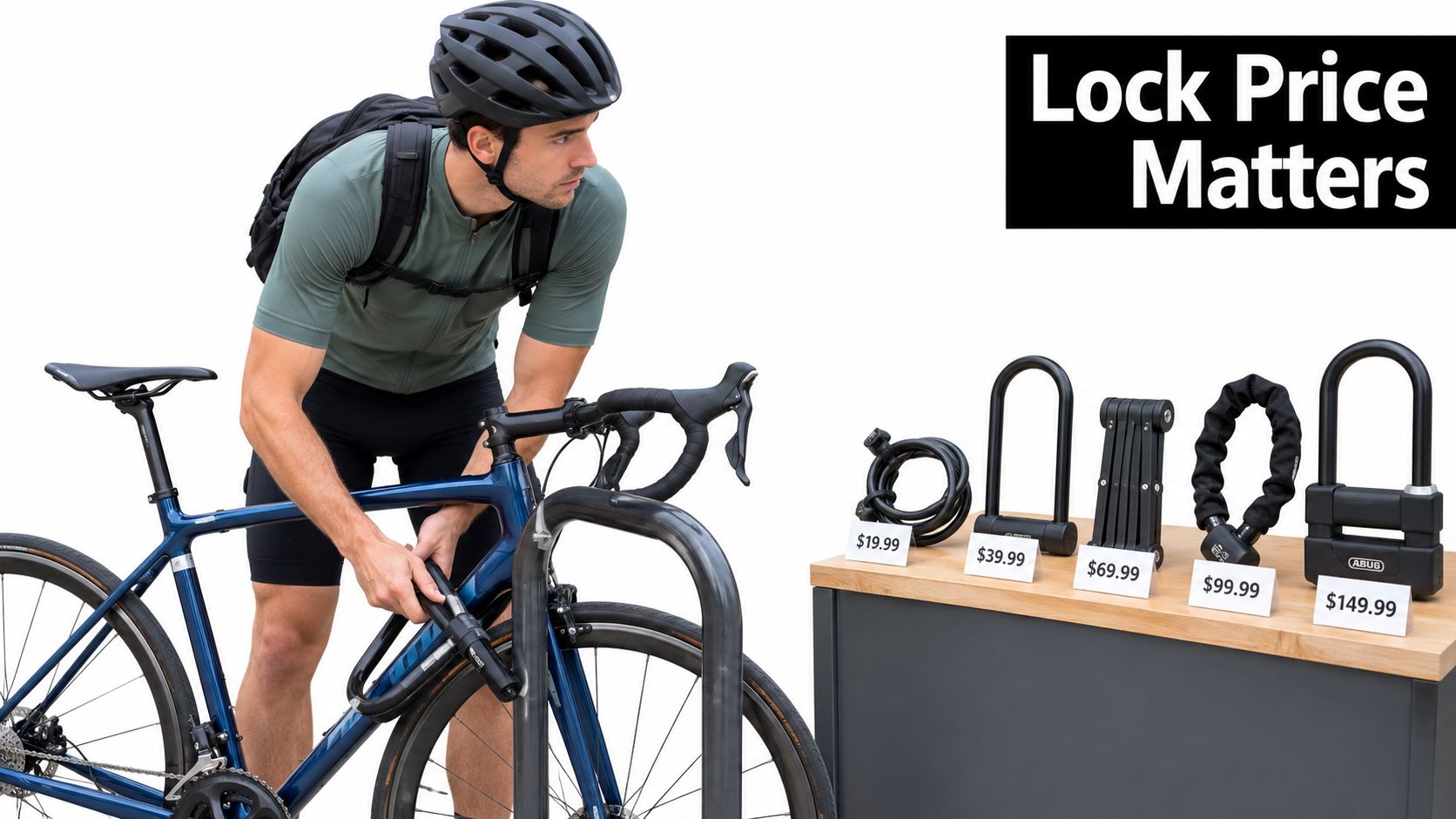
Price isn't the same as protection
A lock's security rating matters, but so does using it correctly. A lock that secures only a removable wheel, or attaches the bike to a rack that can be lifted or cut, leaves an obvious weakness. The lock, the way you use it and the anchor all matter.
For example, a NZ$60 rated folding lock securing the frame to a solid rack can be a better choice than a NZ$200 D-lock looped through a quick-release wheel. Check that the lock fits around both the frame and a fixed anchor, and look for an independent security rating. Then weigh that protection against how long the bike will be unattended and the consequences of losing it. A lock that earns a strong rating but won't fit the rack you use is the wrong purchase.
Practical rule: Match the lock to the theft risk, parking duration and anchor, then check that it works with your bike.
Spend enough to address the actual threat, not to buy the most expensive lock available. A well-chosen lock and solid anchor make the unattended bike a harder, less convenient target.
Understanding New Zealand Bike Lock Prices
A New Zealand retail listing puts a portable folding bike lock at NZ$53.99, a useful starting point for comparing options (New Zealand bicycle-lock listings). That's an observed product price, not a national average. The same marketplace lists lower-cost combination locks and accessories, while premium hardened-steel U-locks need to be checked by exact model.
That distinction matters because “bike lock” covers products made for different jobs. A light combination lock, a folding lock, a heavy chain and a hardened-steel U-lock don't offer the same construction, ease of carrying or level of security. Even within one type, dimensions, materials and independent testing can differ. A single average would blur those differences and could mislead you about what a particular lock is worth.
Compare the price signal with the product
The premium ABUS Granit X-Plus 540 illustrates why an exact-model check matters. Independent New Zealand price-tracking data indicates that price-history functionality exists for the product, but historical price data isn't available for that specific variant. Don't treat an unavailable history as evidence of a typical market price.
| Price signal | What it means | What still needs checking |
|---|---|---|
| A folding lock listed at NZ$53.99 | A real local reference point for a portable lock | Security rating, construction, fit and intended use |
| A cheaper combination lock or accessory | A lower-cost listing exists | Whether it can secure the frame to a fixed anchor and meet your security needs |
| A premium branded model without usable price history | Exact-model pricing may be hard to establish from price tracking | Current retailer price, certification, dimensions and warranty |
Use NZ$50–NZ$60 as an observable starting benchmark, not a promise that a lock in that range will suit every bike. For a premium product, compare the exact model and its tested rating instead of assuming a national average or trusting a brand name alone.
A price tag tells you what the seller is asking. It doesn't show whether the lock can reach around your frame and a secure anchor, whether you'll carry it every day, or whether your insurer accepts it. Those checks are what turn a price comparison into a buying decision.
Comparing Cable Chain U-Lock and Folding Locks
The four common formats trade portability, flexibility and rigidity in different ways. None is automatically right for every rider. Start with your regular parking places, then consider which lock you'll carry and use consistently.
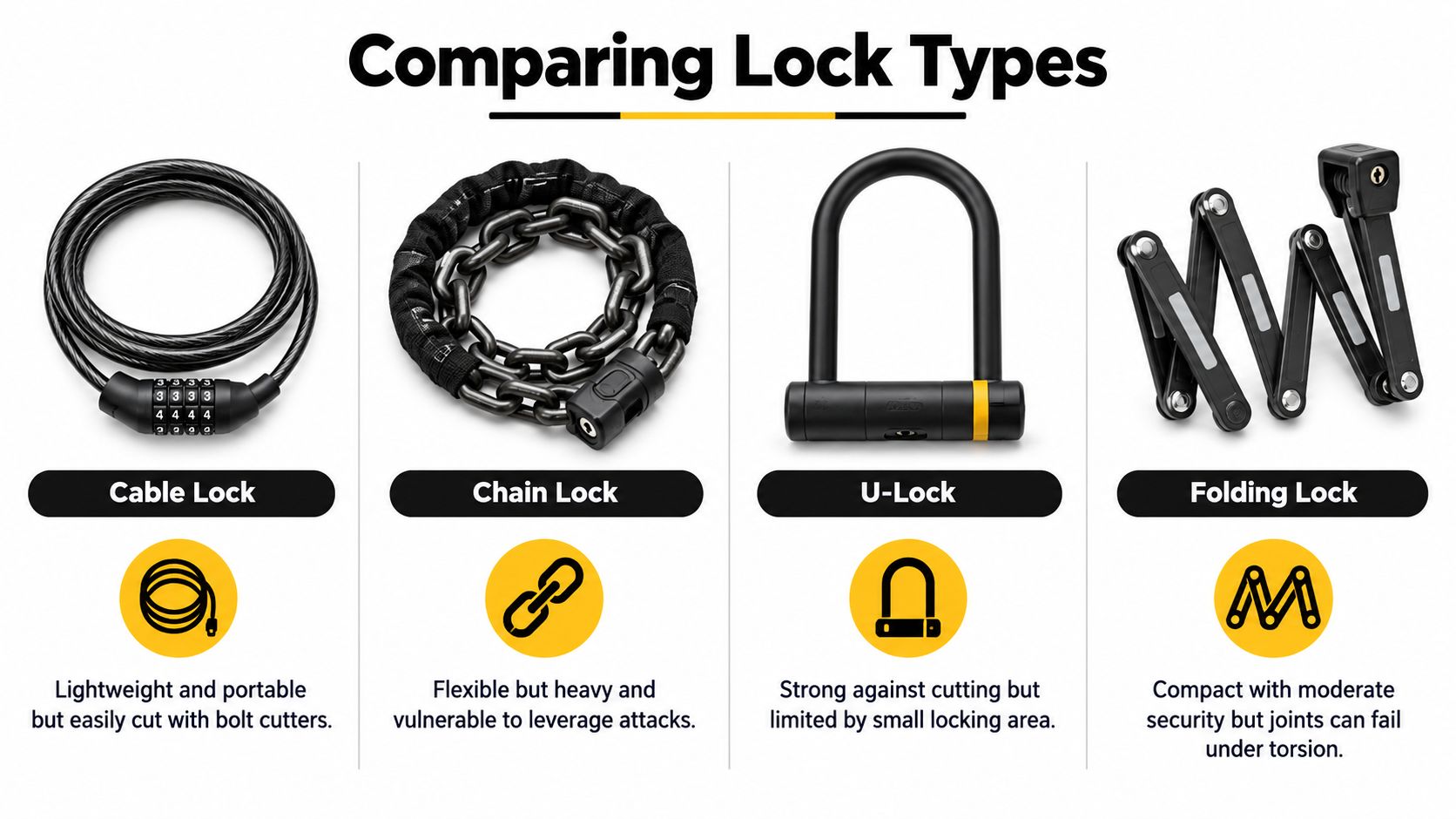
How each design fits real use
A cable lock is light and easy to loop around awkward shapes, but that convenience comes with a serious limitation: a thin cable is vulnerable to cutting. It can make sense as a secondary way to secure an accessory or add a layer to a stronger lock. Don't rely on an unrated cable as the main protection for a valuable bike left unattended for a long time.
A chain lock can wrap around a frame and a broad range of anchors. Its flexibility is useful where a rigid lock won't fit, but the chain's links, construction and resistance to force matter. A heavy chain may suit a bike kept at home or a rider willing to carry it; compare the actual security rating rather than judging by bulk.
A U-lock uses a rigid shackle to create a strong barrier around the bike and anchor. It's often a practical choice for urban stops where a suitable rack is available. Its main drawback is fit: a small locking area can make it difficult to capture the frame, a wheel and the anchor together. Position it tightly and avoid leaving unnecessary room for tools.
The folding lock packs into a compact shape and can be easier to carry than a chain. Its linked plates and joints make it different from a solid shackle, so check the independent rating and whether the opened length fits your usual anchors. For a closer look at chain design and use, see this guide to bike lock chains.
Match the lock to the stop
A quick café stop beside a solid bike stand calls for a manageable lock that you'll bring. An all-day commute or an unattended e-bike needs a more deliberate security choice, including an appropriate rating and careful anchoring. For some riders, a primary D-lock plus a second lock of a different type will suit long or exposed stops better than relying on one design.
The demonstration below shows a bike being secured. Watch for the practical details: which part of the bike the lock captures and how the setup relates to the anchor.
What Changes the Value of a Lock
A higher price is defensible when it buys something useful: independently tested resistance, suitable dimensions, reliable construction or a design that makes correct locking easier. A premium name by itself isn't proof of protection.
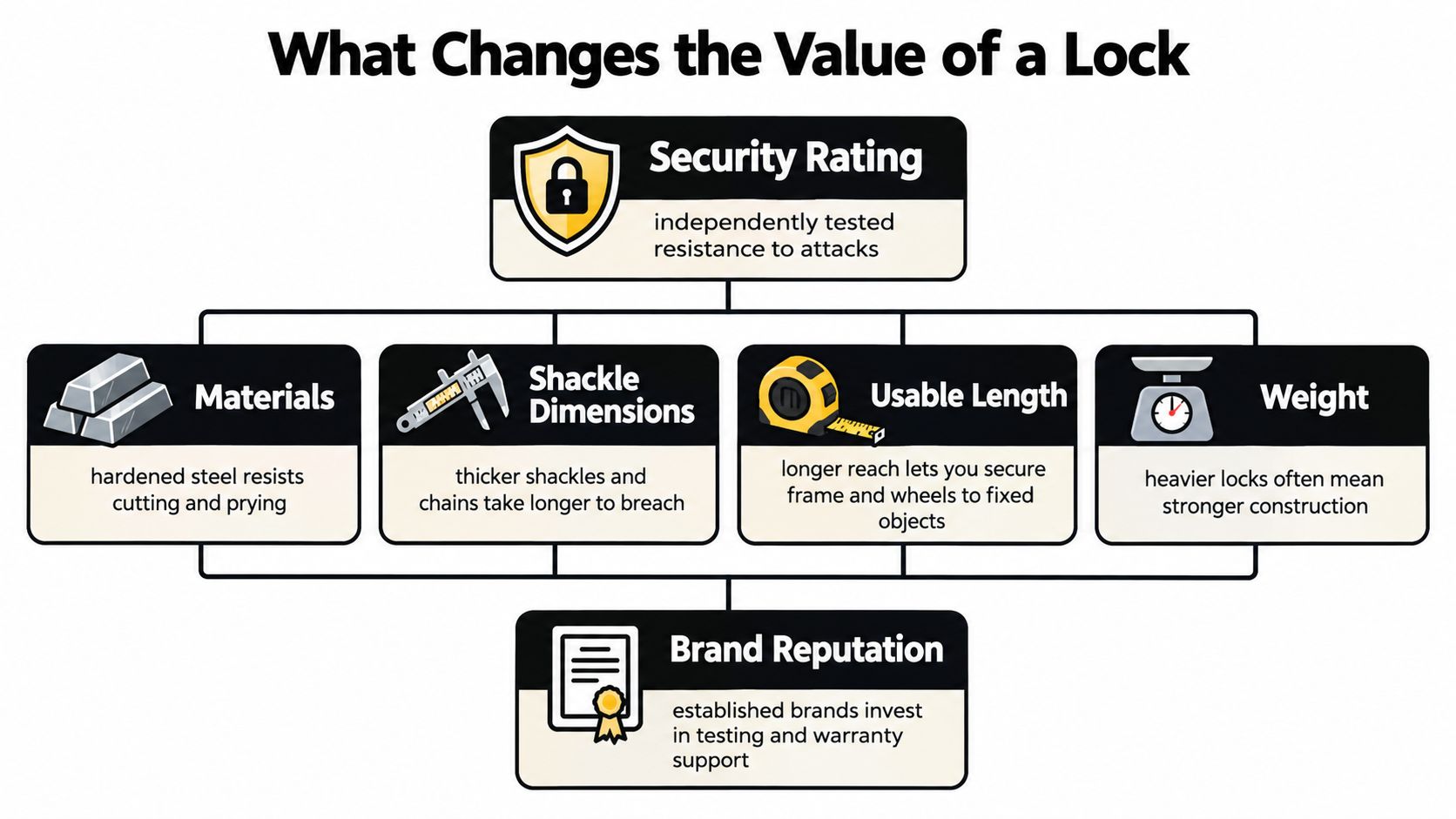
Look for an independent benchmark
Consumer NZ recommends choosing locks tested by ART or Sold Secure. It identifies ART 2-star as approximately equivalent to Sold Secure Silver, which it treats as the minimum level it recommends for meaningful security (Consumer NZ's bike-lock guidance). Treat those labels as evidence of tested performance, not decoration. Check the exact model and rating, because a manufacturer's claims about thickness don't replace independent testing.
After the rating, check whether the lock fits your bike and how you ride:
- Material and construction: hardened steel can resist cutting and prying better than a lightweight cable, but the rating is a more useful comparison than appearance alone.
- Dimensions: a thicker shackle or chain may be harder to attack, but the lock still needs enough usable space to secure the frame to your chosen anchor.
- Weight and portability: a sturdy lock that stays at home because it's awkward to carry won't protect your bike at the shops.
- Locking area: check whether the shackle or chain can reach around the frame and anchor, and whether you can include a wheel where practical.
- Warranty and support: read what the warranty covers and whether replacement parts or service are available.
Pay for a practical upgrade
A more expensive certified D-lock or chain can be a sensible step up from an unrated cable or basic combination lock, especially for an e-bike or high-value mountain bike. You're paying for a measurable security benchmark and a design that fits the job, not a guarantee against theft.
The opposite is also true. A branded lock that lacks the rating you need, is too short for the local rack, or is too heavy for your regular ride may not represent good value. Compare the exact model, its certification, usable dimensions and warranty before deciding that the higher price is justified.
Setting a Security Budget for Your Bike
Leaving a bike outside a shop for a few minutes is different from locking it at a trailhead or outside work all day. Set your lock budget around the loss you could face, the places the bike waits, and whether you can secure it properly. A fixed percentage of the bike's purchase price misses those practical differences.
New Zealand Police reported more than 166 bicycle thefts in Christchurch over six weeks, with losses of approximately NZ$250,000. The report's average loss was about NZ$1,506 per stolen bicycle. Treat that as context, not a national price target or proof that any particular lock would have prevented those thefts (New Zealand Police's Christchurch theft warning).
Budget for the parking pattern
For a lower-value bike used on short errands, choose a rated lock you'll carry and can secure to a solid anchor. If you commute and leave your bike unattended for longer, pay for a stronger certified option. Keeping a second lock at work can make sense if carrying extra weight every ride is a nuisance.
A high-value mountain bike calls for a security plan suited to where you leave it. At a trailhead, check for a visible, secure anchor before relying on a lock alone. If no suitable anchor is available, changing where you park can reduce risk more than buying a costlier version of the same lock.
E-bike owners should budget against the potential replacement loss, not just the purchase price of a basic lock. E-bikes can be a particularly costly theft, so check whether your insurance policy's bicycle limit covers the bike. A correctly fitted certified lock may still need to be part of a wider plan. Use secure storage where possible, add a second lock for exposed stops, and remove the battery when practical.
A moderately priced certified lock used through the frame and around an immovable anchor beats a costly lock looped through a wheel or attached to a weak rack.
Your budget may need to cover a second lock or a better parking arrangement. Spend more when the added cost improves the setup you'll use, not just because the bike is expensive. The right choice balances the bike's value, independent security ratings, anchor quality, time parked and any insurance conditions.
How to Evaluate a Lock Before Buying
Use the same checks in the shop or online. Start with the bike, the parking place and the time it'll be unattended. Then choose the least expensive lock that meets the security needs and fits those conditions. Cheap is fine if it does the job. Unrated and unsuitable isn't.
Check the lock against the bike and anchor
- Confirm the rating. Look for an ART or Sold Secure test result for the exact model. Don't substitute a product description or a claim about steel thickness for a recognised rating.
- Check the fit. Compare the lock's usable length and internal space with the frame and the anchor you use. A compact lock can be secure but still too small to reach around both.
- Plan the locking position. The lock should capture the frame and pass around a fixed, immovable object. Add a wheel where the shape allows. Securing only a wheel can leave the rest of the bicycle vulnerable.
- Consider daily handling. Check weight, mounting options and whether you can carry the lock without a nuisance. If it's difficult to use, you may be tempted to leave it behind.
- Read the warranty and policy wording. Your insurer may set conditions for the anchor or lock rating, so check before buying rather than assuming a lock will qualify.
Treat insurance as part of the purchase
NZ insurance guidance indicates that a theft claim may depend on securing the bike to a fixed, immovable object with an approved or suitably rated lock. Some insurers use an unspecified bicycle or e-bike limit of about NZ$3,000, while higher-value e-bikes may need to be specifically listed (NZ e-bike insurance guidance). Check your own policy for its requirements and make sure the model you buy complies.
For a product example, compare the AXA Fold Pro 100 folding lock with other options by its exact rating, dimensions, mounting practicality and current price. Don't assume that a folding design or a particular price automatically meets your insurer's conditions.
Buying and Maintaining Your Bike Lock
Your lock only helps when it secures the frame to an anchor that cannot be moved or easily cut. Keep the lock with the bike, and don't rely on a cable through an accessory as your sole protection. For an e-bike, remove the battery when practical, especially if you're leaving it unattended.
Check the anchor before locking up. A rack that looks sturdy may be poorly installed or easy to remove. Choose a visible parking spot where possible, and leave as little spare room inside the lock as you can. Good positioning reduces obvious weaknesses, but it cannot guarantee against theft. Longer unattended periods and exposed locations call for more care, not just a higher-priced lock.
Keep the lock working and keep a record
Inspect the lock regularly for stiff operation, damaged links, worn pins, corrosion, or a mechanism that no longer closes securely. If it is damaged or doesn't work properly, don't trust it as your only protection. Follow the manufacturer's care instructions, and don't force a jammed mechanism.
Keep your receipt and note the lock's brand and model. Photograph your bike secured in its usual storage spot, with the lock visibly attached to the frame and anchor. These records can help document your setup if you make an insurance claim.
For local advice, workshop services and quality gear, including ABUS, Rider 18 is a New Zealand bike shop and online store that ships nationwide, with free delivery over NZ$100 (Rider 18's New Zealand store). Check its bike specials when comparing offers, but choose by security rating and fit, not discount alone. Match the lock to your bike's value, parking routine, anchor and insurer's conditions; e-bikes can make the cost of a theft especially high, so spend where your actual risk warrants it.
If you're comparing locks for a commuter, mountain bike or e-bike, start with where you park and how long the bike is left unattended. Visit Rider 18 for bike gear, friendly advice and workshop support, and choose a lock that meets your needs without paying for features you don't need.


