

Bike Service Price List for Nelson Riders in 2026
- by Nigel
-

A basic bike service in Nelson typically starts around NZ$90, a standard service around NZ$150 to $180, and a major service or e-bike service around NZ$250 to $320, with parts, e-bike surcharges and freight charged separately on top. You're probably standing in the garage, listening to a noisy chain or squeezing a soft brake lever, trying to work out what you'll pay. Don't budget for the headline. Budget for the likely total.
What a Bike Service Price List Actually Tells You
You book a service after your gears start skipping on the ride home. The online menu looks clear, then the workshop rings about pads, a chain and sealant, and the total moves. That gap is where most frustration starts.
A bike service price list tells you the labour package, not the finished bill. It rarely covers worn parts, consumables or extra time once a mechanic finds damage. Read it as a starting point, then ask what's excluded.
Put Your Bike in the Right Bucket
Most Nelson jobs fall into three groups:
- Routine servicing: A commuter, family bike or hardtail that needs adjustment, lubrication and a safety inspection.
- E-bike servicing: Mechanical work plus possible diagnostics, firmware checks and heavier wear on brakes, tyres and drivetrain parts.
- Component work: Suspension servicing, wheel truing or building, bearing replacement and drivetrain replacement quoted by condition.
Demand for that second group keeps growing. In 2023, 20% of New Zealanders owned or had access to an e-bike, while 19% cycled at least a few times per month, according to Waka Kotahi research on cycling attitudes and participation.
Don't ask only what a service costs. Ask what the workshop will do, what parts commonly get added, and when they'll call for approval.
That's the practical way to compare shops. The cheapest package can produce the higher bill if it excludes work your bike needs to be safe. The sample invoices later show labour, parts and consumables as separate lines, because that's how you should judge value. If a menu won't define its scope, don't treat its price as comparable.
Basic Service and the Safety Inspection Baseline
A basic service should be a defined inspection, not a vague tune-up. You're paying a mechanic to check safety-critical systems, make minor adjustments and report worn parts before they fail.
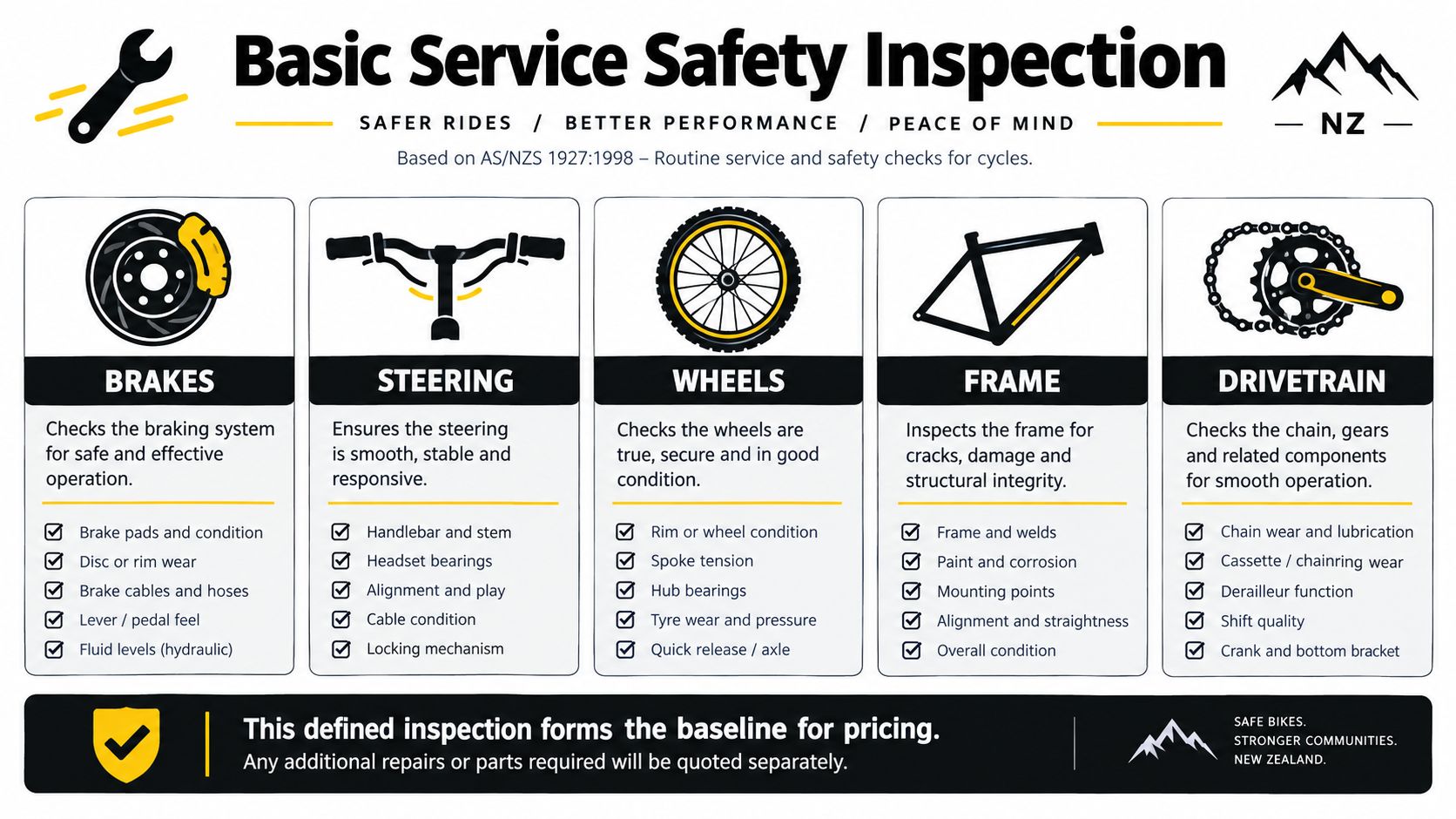
The compliance baseline sits in AS/NZS 1927 1998 for pedal bicycles, which covers bicycles with a wheelbase of at least 640 mm and power-assisted models up to 0.2 kW, including braking, steering stability, fasteners, cables, wheels and pedals. Auckland Transport guidance in the same verified material identifies brake pads below 3 mm as requiring attention and recommends annual professional servicing.
What the Mechanic Should Check
- Braking: Front and rear stopping power, pad condition and lever travel.
- Wheels and tyres: Wheel security, true, tyre damage and pressure.
- Steering and fasteners: Headset movement, seat post security and major bolts.
- Drivetrain function: Gear changes, chain condition and obvious cable problems.
Cleaning, lubrication and minor brake or gear adjustment may sit inside the package. Confirm that before booking, because workshops draw this line differently.
Replacement pads, hydraulic bleeding, significant wheel truing, drivetrain parts, suspension work and electrical diagnostics sit outside a basic inspection. A good workshop flags them, explains urgency and gets your approval. If pads are unsafe, replacing them isn't an upsell. It's the point of inspecting the bike.
Use this checklist when comparing basic tiers. If one shop only adjusts gears and inflates tyres while another completes the full safety inspection, they're not selling the same product.
Standard and Major Service Tiers Compared
Choose a standard service when the bike's ridden regularly and needs more than inspection and adjustment. Choose a major service when it's been neglected, makes bearing noises, or needs several systems opened and assessed together.
A standard tier normally deepens the basic work. The mechanic cleans the drivetrain more thoroughly, adjusts brakes and gears, checks headset and bottom bracket condition, trues wheels within the stated scope and may inspect hub movement. Parts found worn still need separate approval unless the menu explicitly includes them.
A major tier goes further into bearing inspection, frame and linkage checks on full-suspension bikes, detailed reporting and replacement planning for wear items. It doesn't magically include every bearing, seal or cable. Ask whether parts and installation labour are inside the package or added line by line.
Bike Service Tiers at a Glance
| Tier | Typical Scope | Indicative Nelson Price | Typical Turnaround |
|---|---|---|---|
| Basic | Safety inspection, minor adjustment, lubrication | Entry band from the opening guide | Fastest when no parts are needed |
| Standard | Basic scope plus deeper drivetrain clean and wheel attention | Middle band from the opening guide | Longer if parts require approval |
| Major | Comprehensive inspection, bearings and linkage assessment | Upper band from the opening guide | Longest, especially with ordered parts |
Practical rule: Book the tier for the work you know is due, not the biggest package because you're unsure. Ask for an inspection first if condition is unknown.
Turnaround depends less on the tier name than on parts availability and how quickly you approve extras. A standard service waiting on a cassette can take longer than a major service with everything on the shelf. Get the scope in writing. That's how you compare value instead of package names.
E-Bike Service Work and Electrical Diagnostics
An e-bike service is not automatically an electrical service. That's the question to ask before you book: does the price cover the motor, battery and electronics, or only brakes, gears, wheels and steering?
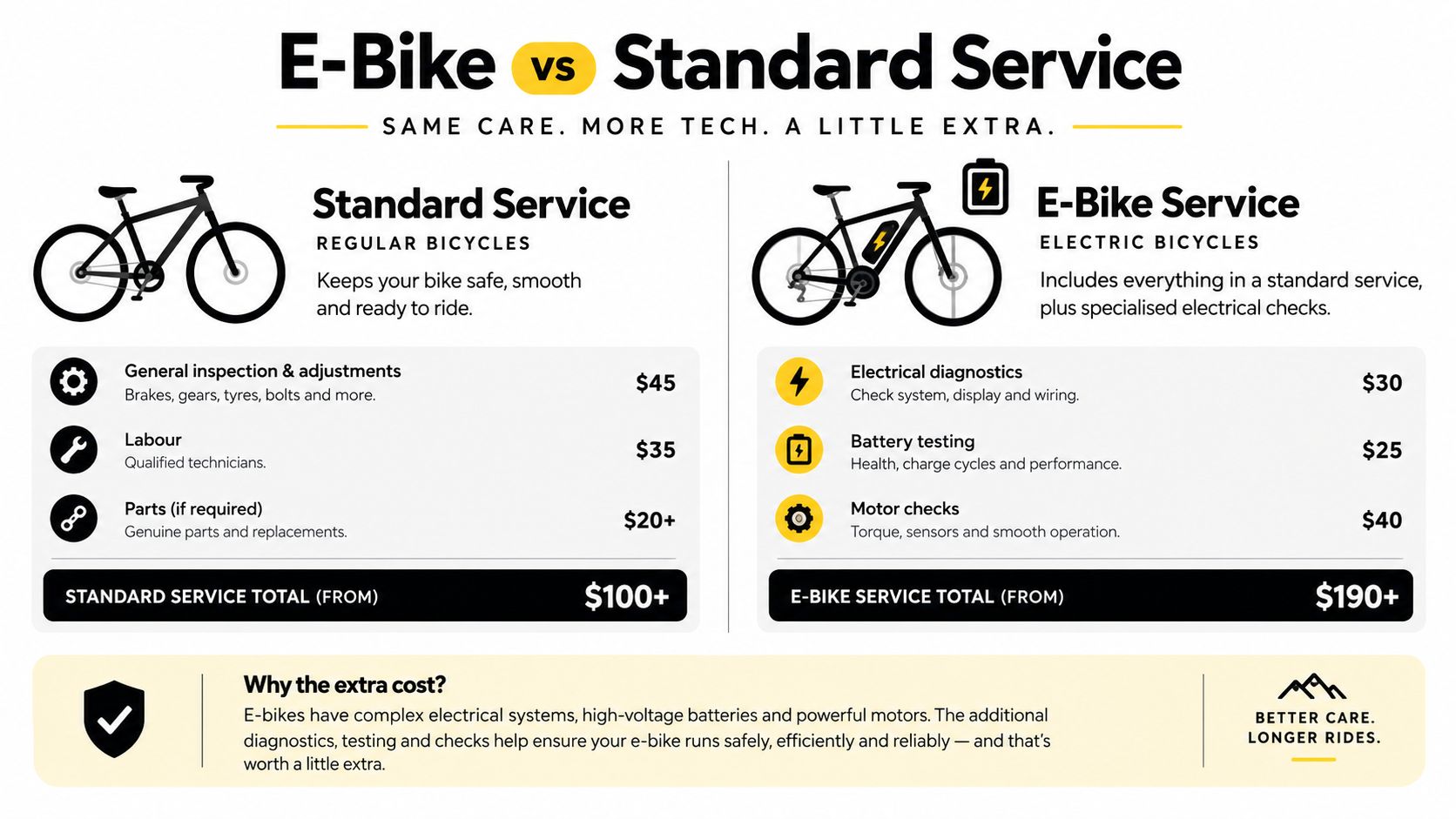
NZ menus show why this matters. One provider prices an e-bike quick tune at $110 versus $90 for an adult bike, while another applies a 10% e-bike surcharge for additional labour, as shown on Pedal Easy's published service menu. Those premiums don't prove diagnostics are included.
Separate Mechanical Work From Electrical Work
Mechanical servicing covers tyres, brakes, drivetrain wear, bearings, cables and wheel condition. Electrical work can include battery health checks, charging-system inspection, motor diagnostics, display faults, error-code interpretation and firmware updates. Some tasks need brand software or manufacturer-authorised support for systems such as Shimano, Bosch, Yamaha or Bafang.
Before booking, confirm:
- System compatibility: Can the workshop access diagnostics for your motor brand?
- Included reporting: Will you receive a diagnostic or battery report, or is that separate?
- Firmware: Is an update included, charged separately or unavailable?
- Exclusions: Are internal battery faults and motor repairs outside workshop scope?
Bring the charger, battery key and any display error code. Charge the battery enough for testing and tell the mechanic if the fault appears under load, after rain or at a certain assistance level. That detail saves diagnostic time.
For help with a fault rather than routine maintenance, read the guidance on finding electric bike repair near you and book diagnostics explicitly. Don't pay an e-bike premium and assume the electrical system was tested.
Common Add-Ons and Wear Parts
Wear parts turn a tidy package price into a real invoice. That's normal, provided the workshop identifies them early and separates parts, labour and consumables.
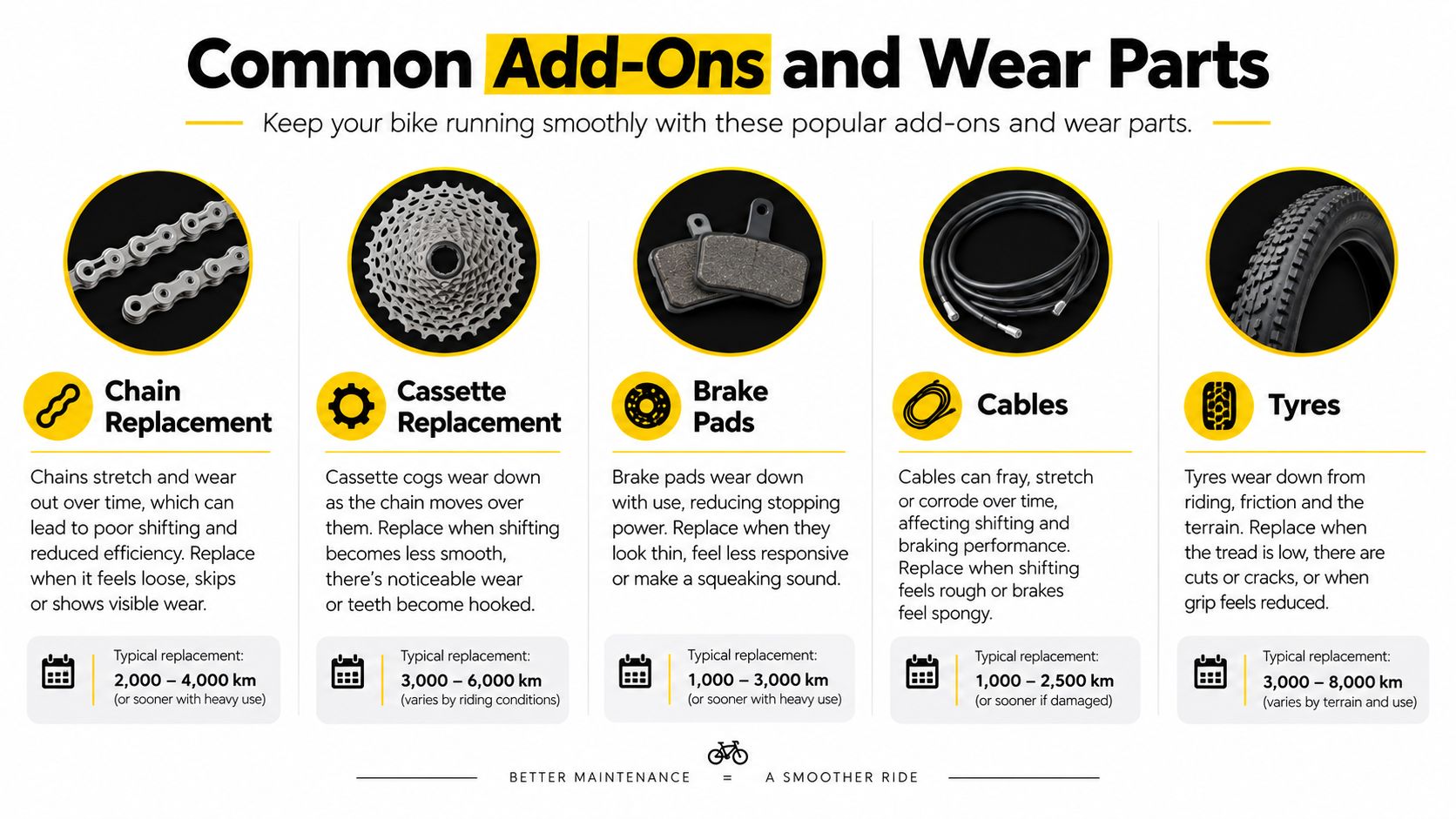
The common additions are predictable:
- Chain and cassette: A stretched chain accelerates cassette and chainring wear, so delaying replacement usually enlarges the job.
- Brake pads and rotors: Pads are routine wear items, while contaminated or damaged rotors add parts cost.
- Tyres and tubes: Cuts, worn tread, sealant failure and puncture damage sit outside adjustment packages.
- Cables and housing: Corrosion and friction can make accurate gear or dropper adjustment impossible.
- Bearings: Headset, bottom bracket, hub and linkage bearings need condition-based quotes.
- Tubeless consumables: Sealant, tape and valves may be charged apart from service labour.
Ask whether fitting is included when a part is replaced during a service. Some work shares labour with the package, while other jobs, such as a hydraulic bleed or suspension lower-leg service, remain separate tasks. For fork and shock intervals, use the detailed guide to mountain bike suspension service in NZ rather than assuming suspension work sits inside a major tier.
A worn chain shouldn't surprise you at pickup. A workshop should measure it, explain the consequence of waiting, and quote the replacement before fitting it.
Prioritise safety and cascading wear. Brakes, tyres, steering bearings and a badly worn chain come before cosmetic items. If budget is tight, ask the mechanic to split work into do now, monitor and plan next. That gives you control without ignoring risk.
Labour Rates, Diagnostic Time and Approval Thresholds
Workshops price package services because the tasks are predictable. Fault-finding isn't. A creak, intermittent e-bike cut-out or seized bearing can consume time before anyone knows which part will fix it.
That's why diagnostic labour may be charged by time, with a minimum charge. You're paying for inspection, testing and elimination of causes, even if you decline the repair. Ask upfront whether diagnostic time is credited toward the job if you proceed. Don't assume it is.
Set an Approval Threshold When You Drop Off
An approval threshold is the amount the workshop can spend before contacting you. Set it clearly:
- Name your cap: State the total you're comfortable approving without a call.
- Define the total: Confirm whether the cap includes parts, consumables, freight and labour.
- Set priorities: Say safety work comes first if choices arise.
- Require a pause: Ask the mechanic to stop and quote once the cap would be exceeded.
Suspension internals, wheel building, frame issues and electrical faults are sensibly quoted after inspection. A flat menu price would either overcharge simple jobs or force the workshop to cut corners on difficult ones.
Read the final invoice line by line. Package labour, extra labour, each part, consumables and freight should be visible. If a line just says miscellaneous, ask what it covers. Clear workshops won't mind explaining their own invoice.
My recommendation is simple. Never say, just fix whatever it needs, unless cost doesn't matter. Give a threshold and a phone number you'll answer.
Booking, Turnaround and Seasonal Timing
Book before the bike becomes unrideable, especially heading into summer, school holidays and local riding events. Workshops fill quickly when everyone pulls bikes from garages at once.

Give the workshop the make, model, approximate year, last service date and the symptoms you've noticed. Mention if it's an e-bike, full-suspension bike, cargo bike or kids' bike, because stands, tooling and diagnostic access differ. Rider 18 operates a Nelson workshop alongside its bike and parts store, so local riders can discuss the bike in person when booking.
Bring the Items That Prevent Delays
- E-bike gear: Charger, keys and a note of any error codes.
- Riding accessories: Cleats or pedals only if they need checking.
- Security items: Remove valuables, but leave fitted parts that affect the reported fault.
Turnaround stretches when parts need ordering or approval takes days. Ask whether the estimate means completion or first inspection. Those are different promises.
Book off-peak if you can. You'll get better scheduling choice, and the mechanic won't be forced to triage your bike against a queue of pre-holiday emergencies.
Sample Invoices for Common Nelson Riders
Sample invoices expose the difference between a package and a total. Use these structures to budget, then replace the parts lines with quotes for your exact bike.
Published NZ pricing shows a full service at $250 for an adult bike, $320 for an e-bike and $320 for a full-suspension MTB on Cycle Service's NZ workshop menu. Those package figures still need parts and any excluded work added.
Three Likely Bills
Commuter tune plus wear parts
- Service labour: Selected tune package.
- Parts: Brake pads and tyre, quoted by brand and size.
- Consumables: Lubricant or cleaning materials if charged.
- Likely total: Package plus approved parts and any fitting not included.
E-bike service plus rear tyre
- Service labour: E-bike package or standard package plus surcharge.
- Electrical scope: Firmware or diagnostic report only if explicitly listed.
- Parts: Rear tyre and possibly tube or sealant.
- Likely total: Higher than the e-bike headline if diagnostics and tyre fitting are separate.
Full-suspension MTB major service
- Service labour: Major package.
- Inspection findings: Linkage bearings, chain, cassette or brake parts as required.
- Specialist work: Suspension lower-leg or shock service quoted separately unless named in the package.
- Likely total: The package is only the base, because bearing and suspension parts vary by model.
Don't compare these by package alone. Compare the written scope and likely extras. If a shop can't show how an invoice is built, you can't budget with confidence.
How Often to Service Based on How You Ride
Service frequency should follow distance, conditions and symptoms, not the calendar alone. Wet commuting, dusty trails and heavy e-bike use wear parts faster than occasional dry rides.
The Ministry of Transport estimated bicycle maintenance at 4.17 cents per kilometre, equal to about NZ$83.40 at 2,000 kilometres a year and NZ$208.50 at 5,000 kilometres, in its walking and cycling cost analysis. Treat that as planning context, not a quote for one workshop visit.
Book sooner if you notice:
- Brake changes: Longer lever travel, noise or weaker stopping.
- Shifting hesitation: Skipping under load or slow movement across the cassette.
- New noises: Creaks, clicks or grinding from bearings and drivetrain parts.
- Visible damage: Cut tyres, bent rotors, loose wheels or rough steering.
An occasional rider may need an annual inspection, while a commuter or frequent trail rider should expect more frequent wear checks. E-bike riders also need electrical health considered alongside ordinary wear. For timing signs in more detail, see when to service your bike.
Plan an annual maintenance budget if you ride a lot. Small, timely replacements beat one large repair after several worn parts damage each other.
Frequently Asked Questions Before You Book
Does an E-Bike Service Check the Electrical System
Not always. Confirm whether battery health, motor diagnostics, firmware and error codes are included, or whether you're buying mechanical servicing only.
What Approval Cap Should I Set
Set a total you can accept without a call, and confirm it covers labour, parts, consumables and freight. Require the workshop to pause before exceeding it.
How Long Will the Service Take
A straightforward package is fastest when parts are in stock. Diagnostics, ordered parts, suspension work and peak-season queues extend turnaround.
What Should E-Bike Owners Bring
Bring the charger, battery key and details of any fault or error code. Tell the mechanic when the problem happens.
Bring your bike to Rider 18 in Nelson for a clear workshop assessment, defined service scope and approval before extra parts or labour are added. Whether you ride a commuter, e-bike or full-suspension mountain bike, the team can help you choose the right service level without guessing at the final bill. Start at Rider 18 and book the service your bike needs.


